
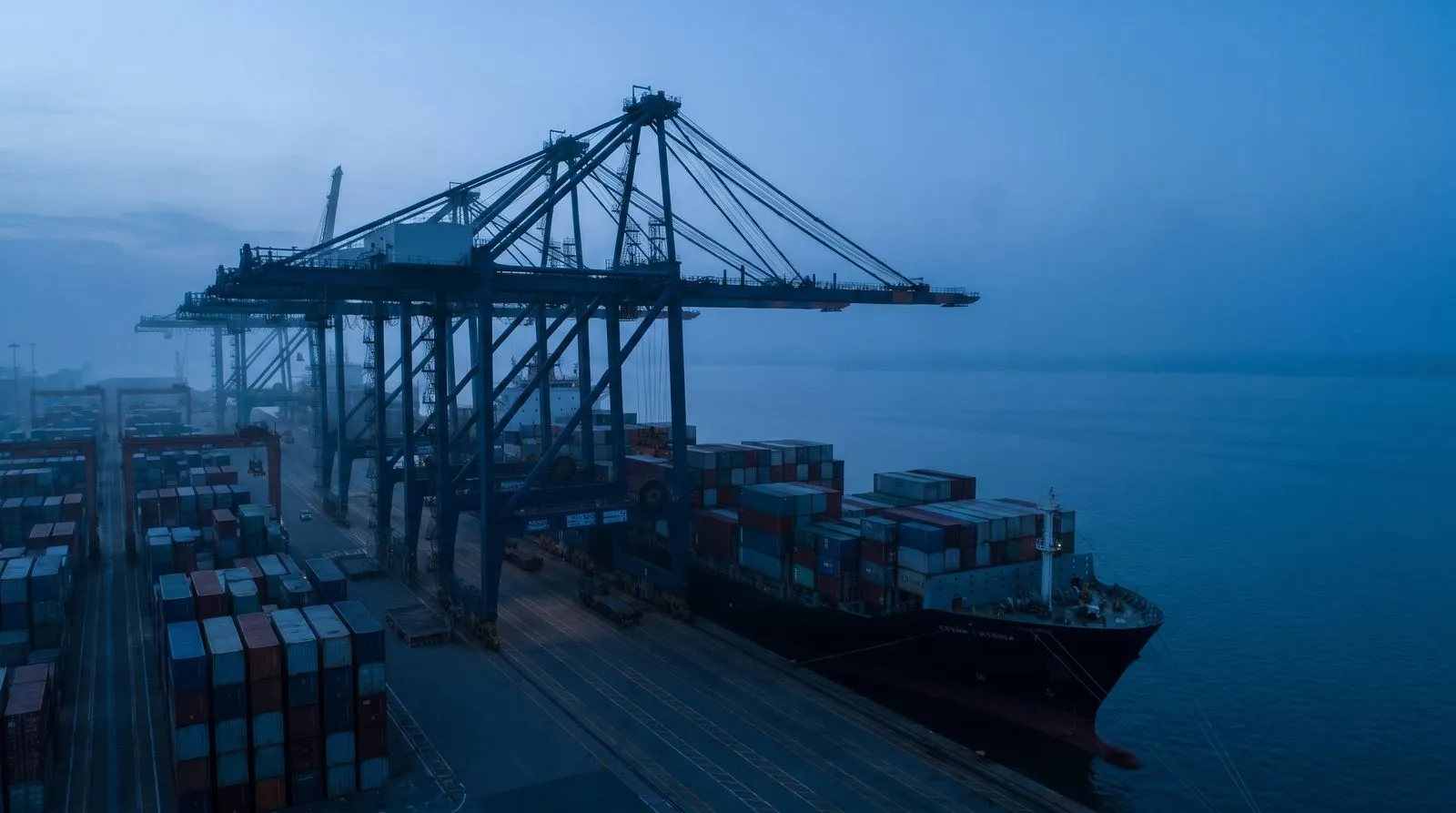
For a coconut programme shipping out of Colombo, the Incoterm decides three things: who books the vessel, who carries the cost of Colombo local charges, and who holds the risk if a box is damaged between the yard and the ship. FOB gives the buyer control of freight. CFR hands freight to the seller but leaves risk with the buyer once the goods are on board. DAP keeps both with the seller until the container reaches the buyer’s door.
The right choice depends less on price than on who in your team can manage a freight booking. This post compares the three rules for Incoterms coconut contracts from Colombo, and flags where the paperwork and the invoices diverge from what the label suggests.
What does each rule transfer, and when?
An Incoterm splits cost and risk between seller and buyer at a named place. It does not move title and does not set the price. The ICC stresses that the named place is critical to how each rule works, so “FOB Colombo” and “CFR Singapore” each need the place written out in the contract.
| Rule | Who books main freight | Risk passes to buyer | Seller clears export | Buyer clears import |
|---|---|---|---|---|
| FOB Colombo | Buyer | Goods on board at Colombo | Yes | Yes |
| CFR destination port | Seller | Goods on board at Colombo | Yes | Yes |
| DAP named place | Seller | Goods ready for unloading at destination | Yes | Yes |
Two points stand out. CFR moves cost and risk to different places: the seller pays freight to the destination port, yet the buyer owns any loss from the moment the goods are on board. And DAP does not oblige the seller to unload or to pay import duty.
Should a container buyer use FOB at all?
Often the answer is FCA instead. The ICC says FOB and CFR are intended for port-to-port shipments of bulk or break-bulk cargo, and that containerised goods suit FCA better. The reason is practical. A container is handed to the carrier at a terminal gate before it is lifted aboard, and a seller cannot always obtain an on-board bill of lading under FOB. Our earlier post on FOB, CIF and DDP covers that in detail.
Many buyers still write FOB, and it works when both sides agree what it means in practice. Write the handover point into the contract, such as the terminal gate or the vessel’s rail, so that a damaged pallet has an owner.
What does CFR leave with the buyer?
CFR looks like a delivered price, and it is not one. Freight to the discharge port is prepaid, but the buyer carries transit risk across the whole voyage. If a container is lost or wet-damaged at sea, the claim runs against the buyer’s cargo insurance, because the seller has no duty to insure under CFR. CIF adds a seller obligation to buy cover, with the Incoterms 2020 minimum set at Institute Cargo Clauses (C).
For desiccated coconut and coconut cream powder, minimum cover is thin. Condensation and contamination claims rarely fit a narrow clause set. A buyer on CFR should arrange its own all-risks policy and name the open-cover reference on the purchase order.
Which Colombo charges land on the buyer?
The answer depends on who contracts the carrier. Sri Lanka’s freight regulations define “all inclusive freight” to cover terminal handling and documentation charges, as read in a Daily FT column of 5 November 2026. The same column says the handling element finishes with the terminal operator and is paid by the carrier or its agent. It also reads the rules as barring licensed providers from billing an exporter beyond the all-inclusive freight, and suggests the regulator confirm that in writing.
Inland haulage sits outside that definition. On 22 March 2026 the Container Transport Owners’ Association announced a 20% rise in import and export container transport charges after a fuel price increase. The Ceylon Freight and Logistics Association put detention at Rs. 15,000 per day in the same report.
Ask for local charges in writing before you agree to FOB.
Under CFR and DAP the seller quotes these costs inside the price, so they are less visible but still present. Under FOB the buyer’s forwarder bills them directly, and a quote that omits them is not comparable. Our note on demurrage and detention sets out who is billed when a box sits.
When does DAP make sense?
DAP suits a buyer that wants one invoice and one point of contact. The seller carries freight, destination charges up to the named place and the risk of the whole transit. Under the ICC’s wording the goods must reach the named place ready for unloading, so the buyer must have a dock, a forklift and a receiving slot ready.
The cost sits in the price. A seller pricing DAP adds a margin for transit risk and for any delay at the destination port, and the buyer pays it whether or not the risk materialises. DAP also leaves import clearance with the buyer, which surprises first-time importers who assumed “delivered” meant cleared. For a regular programme with stable lanes, that margin often exceeds what the buyer would pay a forwarder directly.
What this means for buyers
- Procurement manager (A): Pick FOB or FCA only if you have a forwarder under contract and can audit local charges. Otherwise CFR or DAP gives one price to benchmark.
- Importer or distributor (B): On CFR, buy your own all-risks cover and name the destination port in the contract. Check that the quote includes inland haulage if you need it.
- Brand owner (C): DAP reduces the number of parties you manage while volumes are small. Reopen the choice once you ship full containers on a fixed schedule.
- Trader or broker (D): Compare offers on a like-for-like basis. FOB Colombo and DAP Singapore differ by freight, insurance, local charges and margin.
Whichever rule you choose, state the named place, the document set (commercial invoice, packing list, bill of lading, certificate of origin, phytosanitary certificate where required) and who pays demurrage. Payment terms interact with this choice too, as covered in our post on LC, TT and DP.
FAQ
Is FOB or CFR cheaper from Colombo? Neither is cheaper by default. FOB excludes main freight and CFR includes it. The buyer’s total cost is the same unless the buyer’s forwarder gets a better rate than the seller’s, so compare landed cost, not the headline price.
Does CFR include insurance? No. The seller has no duty to insure under CFR, and the buyer carries risk from loading. CIF adds a seller duty to buy minimum cover. For coconut ingredients, most buyers arrange their own broader policy.
Who clears the container for export in Sri Lanka? Under FOB, CFR and DAP the seller clears the goods for export. The buyer clears them for import at destination.
Does DAP include import duty? No. DAP leaves import clearance and duties with the buyer. Only DDP places those on the seller, and few suppliers can offer it reliably.
Which Incoterm does the ICC suggest for containers? FCA. The ICC advises it for containerised or multimodal shipments, because delivery completes at the carrier handover rather than on board the vessel.
Need a coconut programme priced on FOB, CFR and DAP side by side? Send the desk an RFQ via the contact page, and we will quote all three on the same spec.