
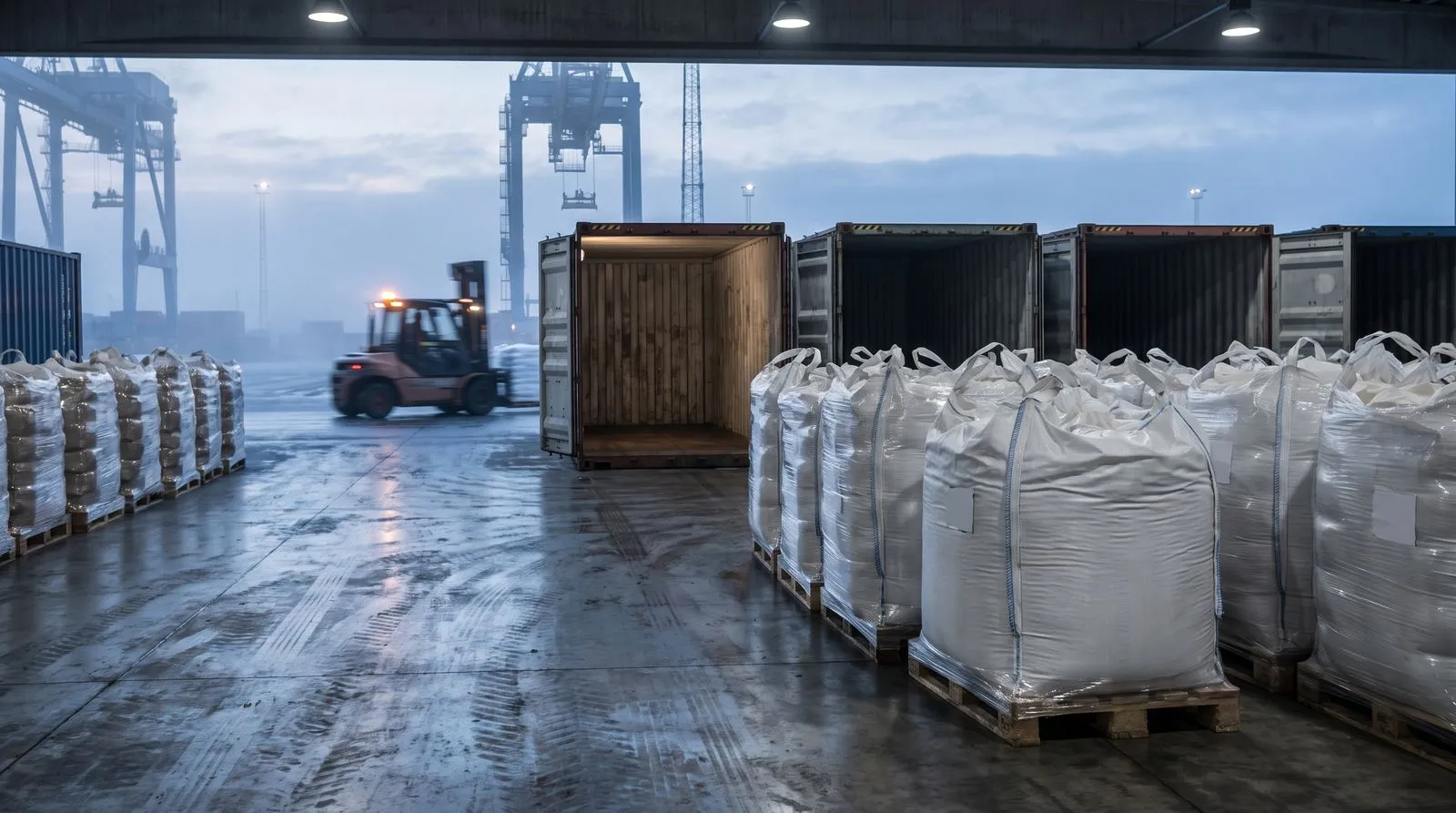
A coconut container bound for Great Britain needs two things settled before it sails: the risk category of the commodity code, and a named importer who will pre-notify the consignment on IPAFFS. If either is missing, the container waits at the port while the buyer sorts out paperwork. Demurrage starts the same day.
The Border Target Operating Model (BTOM) is the UK government’s framework for sanitary and phytosanitary (SPS) controls on goods entering Great Britain. Northern Ireland sits under the Windsor Framework and is a separate case. This note covers what is documented, what depends on the commodity code, and what a procurement team should confirm in writing with its customs agent.
What is IPAFFS and why does it matter?
IPAFFS is the Import of Products, Animals, Food and Feed System. Importers or their agents pre-notify consignments there before arrival. The notification generates a Common Health Entry Document (CHED), which port health and border staff use to decide what checks apply.
Two details catch buyers out. IPAFFS asks for its own commodity code, not the Trade Tariff code, so a correct customs entry can still sit beside a wrong IPAFFS notification. And the notification is tied to the consignment, so a split shipment or a changed vessel means an amended record.
How does BTOM sort coconut ingredients into risk categories?
BTOM sorts plant and plant-product imports into low, medium and high risk. According to a July 2026 importer guide, high-risk plants and plant products need a phytosanitary certificate and pre-notification. Medium-risk goods also need certification, and low-risk goods need neither a certificate nor pre-notification.
Food has a second track. High-risk food and feed of non-animal origin (HRFNAO) is governed by assimilated Regulation (EU) 2019/1793, which lists products and origins under increased official controls or special entry conditions. The listed hazards include mycotoxins such as aflatoxin, pesticide residues, and microorganisms such as Salmonella. Listed products must enter through a designated Border Control Post (BCP), where documentary checks are mandatory.
The desk does not state a category for desiccated coconut, coconut milk powder or coconut oil here. Public summaries we reviewed did not give one, and the answer turns on the exact commodity code and origin. Get it in writing from the importer of record before the purchase order is released.
| Question to settle | Who answers it | Why it moves cost |
|---|---|---|
| Risk category for the IPAFFS commodity code | Customs agent / importer of record | Decides certificate and pre-notification |
| Is the product or origin on the HRFNAO annexes | Importer, checking current Regulation 2019/1793 text | Decides BCP entry and sampling |
| Which port of entry | Importer | Port health fees differ by site |
| Who submits the CHED | Named GB importer or agent | An unnamed submitter stalls the container |
What does a pre-notified consignment cost?
The Common User Charge (CUC) is £29 per commodity line on a CHED for medium- and high-risk goods, capped at five lines, or £145 per CHED. It applies to eligible goods routed through Sevington even when no physical inspection happens. Commercial Border Control Posts add their own inspection fees.
If one document mixes risk categories, the highest rate applies to every line. A buyer who packs a low-risk SKU into the same CHED as a high-risk one pays the higher rate on both.
One short rule follows from that. Keep risk categories apart on paper.
When must the notification be filed?
Customs-agent guidance puts the minimum for plants and plant products at four hours before arrival by RoRo or air, and one working day before arrival for other modes, which includes deep-sea containers. These are agent summaries, not GOV.UK text, so confirm the current figure on GOV.UK. A deep-sea container leaving Singapore or Colombo should not be filed at the minimum anyway. File when the bill of lading and vessel details are firm, then amend if they move.
What belongs in the document pack?
Build one pack per consignment and send it to the GB importer before loading. It should hold the commercial invoice, packing list, bill of lading draft, certificate of origin, and the certificate of analysis for the lot. Where the commodity code is certified, add the export-country certificate the category requires.
Match the lot numbers across every document. A COA that cites one batch and a packing list that cites another gives port health a reason to hold the container for correction, and the buyer pays for the days.
Which BTOM dates are in play?
Several deadlines that buyers read about apply to EU-origin lanes, not to Asian coconut. The documented dates:
- 30 April 2024: documentary and risk-based physical checks and the CUC went live.
- 31 January 2025: safety and security declarations began.
- 31 January 2027: physical and identity checks on medium-risk EU fruit and vegetables, postponed from 1 July 2025.
- Mid-2027: the government’s intended date for a UK-EU SPS agreement, still under negotiation as of mid-2026.
None of these changes the position for a Singapore-consolidated container from Sri Lanka, Indonesia or the Philippines. Treat any quote that cites the 2027 EU deferral as a reason to relax as a red flag.
What this means for buyers
- Procurement managers (A): ask the importer of record for the risk category and IPAFFS commodity code per SKU, in writing, before the PO. Link the answer to the spec sheet.
- Importers and distributors (B): name who files the CHED and who pays the CUC in the contract. A DDP quote that is silent on this leaves the cost with whoever notices it first. The incoterms note covers how the split changes by term.
- Brand owners (C): a CHED that mixes categories raises the charge on every line. Plan SKU grouping per container.
- Traders and brokers (D): if a commodity code lands on the HRFNAO list, sampling and BCP entry add days. Price that into the delivery window, not the margin.
Salmonella is a named hazard under the HRFNAO regime, which is why the kill-step evidence in the salmonella control note belongs in the document pack even where no listing applies. For record-keeping on the US side of the same question, see the FSVP records note.
FAQ
Who files an IPAFFS notification for a coconut shipment? The importer or an agent acting for them. The notification generates the CHED. The exporter cannot file it, so the contract should name the GB party responsible.
Is Northern Ireland covered by these rules? No. BTOM covers goods entering Great Britain. Northern Ireland falls under the Windsor Framework and needs separate advice.
Does a low-risk category mean no paperwork? Not always. Per the July 2026 guide, low-risk plant goods need no certificate or pre-notification, but the category depends on the commodity code, and one source notes that pre-notifying low-risk goods can still trigger the charge. Confirm with the agent.
What happens if the IPAFFS code is wrong? The notification can be rejected or the consignment held for correction. Because IPAFFS uses its own commodity code, check it against the notification, not the customs entry.
Need a UK-ready document pack for desiccated coconut? Send the desk an RFQ on the contact page.