
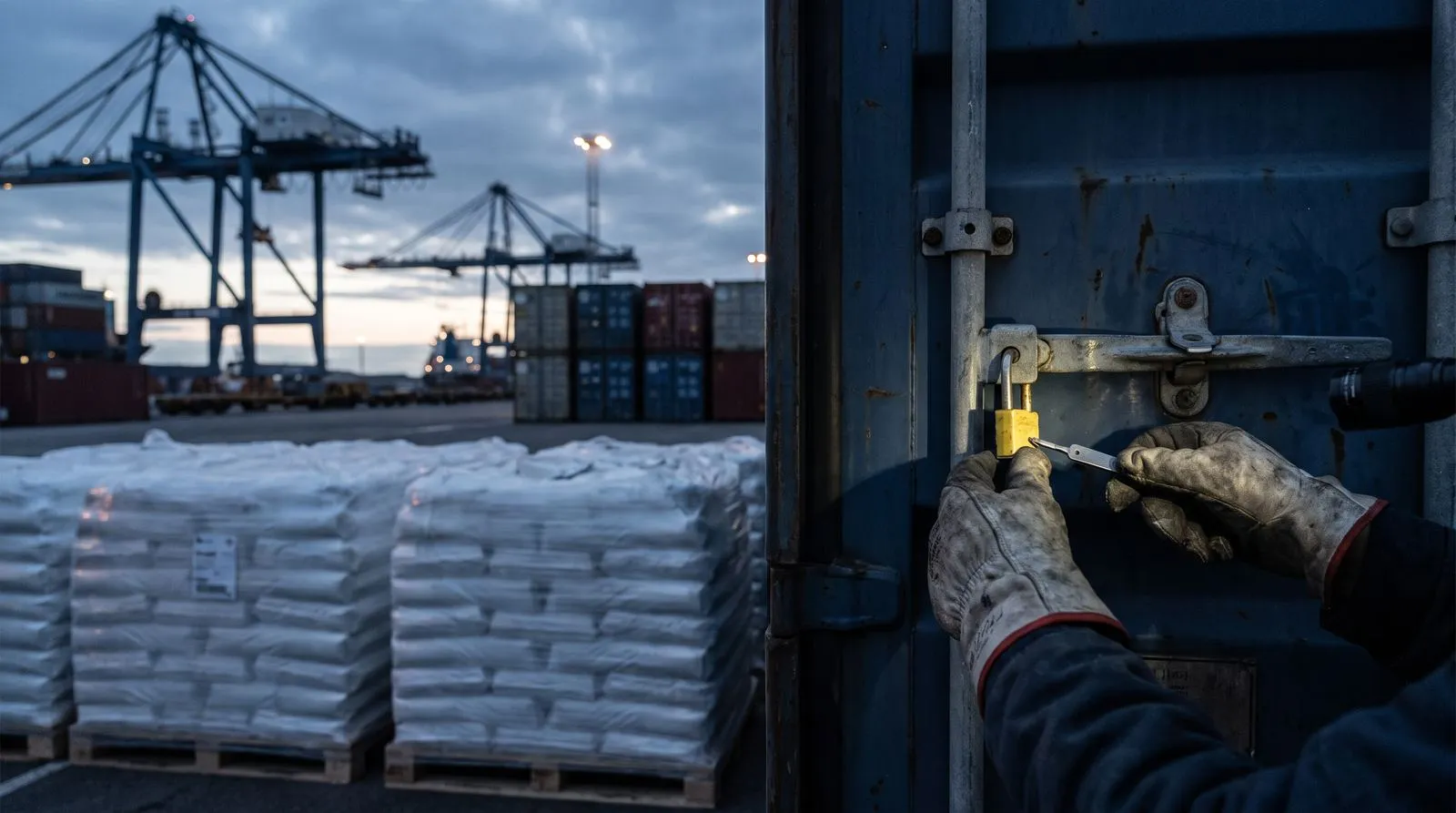
Cargo insurance for coconut shipments comes down to one choice: Institute Cargo Clauses (A), which cover all risks of loss or damage unless excluded, or Clauses (C), which pay only for a short list of major casualties. Under a CIF contract the seller is required to buy only the narrower Clause (C) cover. Under CIP, Incoterms 2020 raised the minimum to Clause (A).
For a container of desiccated coconut or coconut oil, that gap decides who pays when a box arrives wet, short or contaminated. Rain damage, theft and rough handling sit outside Clause (C). A buyer who accepts CIF terms without reading the policy level may hold a certificate that responds to a ship fire but not to a wet pallet.
What do ICC (A) and ICC (C) actually cover?
Clause (A) covers all risks of loss of or damage to the insured cargo, except what the clauses exclude. Clause (C) covers named events only: fire or explosion, stranding, grounding, sinking, capsizing, overturning of the vessel, collision, discharge at a port of distress and general average sacrifice.
| Event | ICC (A) | ICC (C) |
|---|---|---|
| Vessel fire, sinking, collision | Covered | Covered |
| General average contribution | Covered | Covered |
| Seawater or rainwater damage | Covered | Not covered unless caused by a named casualty |
| Theft, pilferage, non-delivery | Covered | Not covered |
| Rough handling, container drop | Covered | Not covered |
| Inherent vice, ordinary leakage, delay | Excluded | Excluded |
| Insufficient or unsuitable packing | Excluded | Excluded |
The exclusions matter as much as the cover. Inherent vice means damage that comes from the nature of the goods themselves, such as moisture migration in a product packed above its moisture limit. No clause pays for that. Poor packing and delay are excluded in both. Read the wording the broker issues, because the table above summarises the standard clauses, not any specific policy.
What do Incoterms 2020 require the seller to buy?
The seller under CIF must insure for at least 110% of the invoice value, in the currency of the contract, at the minimum Clause (C) level. Under CIP, the 2020 rules require Clause (A) at the same 110% floor, as the ICC’s own comparison of Incoterms 2020 and 2010 sets out.
The seller must also hand the buyer the transport document and the policy or other evidence of insurance, as this Incoterms summary from Pillsbury describes. Once the goods are on board, risk has passed, so the buyer is the one who files the claim.
Parties can agree a higher cover level in the contract. A buyer who wants Clause (A) on a CIF sale should write it into the purchase terms, not assume it.
Which cover suits which coconut cargo?
Clause (A) is the sensible default for packaged, high-value or moisture-sensitive cargo. Desiccated coconut in bags, coconut milk powder, and coconut oil in flexitanks all lose value from damage that Clause (C) would not recognise.
Take a 20-tonne FCL of desiccated coconut invoiced at USD 38,000. At 110%, the insured value is USD 41,800. Ask the broker to quote both clause levels on that sum. A single rejected container usually costs far more than any premium difference between the two.
Clause (C) can be defensible on low-value bulk cargo where the main fear is total loss of the vessel. Even then, check whether the buyer’s lender or letter of credit requires broader cover. Where a financing bank is involved, its terms override the buyer’s preference.
Buyers weighing the credit side of the same trade can read our note on trade credit insurance for coconut importers. It covers buyer default, a different risk from cargo loss.
What does a claim need to succeed?
A cargo claim needs prompt notice, proof of the loss, and proof that the carrier was put on notice. Hapag-Lloyd’s claim instructions say underwriters must be told immediately, and list a survey report and a copy of the notice of claim sent to the carrier among the usual documents.
A standard claim file holds the following.
- The insurance policy or certificate, showing the insured value and clause level
- The commercial invoice and packing list
- The bill of lading or other transport document
- A survey report from an independent surveyor, ideally taken before the container is unstuffed
- A written notice of claim to the carrier, which protects the insurer’s right to recover from the carrier
Photographs of the seals, the container condition and the cargo on opening cost nothing and settle many disputes. Do not discard damaged product until the surveyor has released it.
How long do you have?
The carrier is discharged from liability unless suit is brought within one year of delivery under the Hague-Visby Rules, as the Standard Club’s guide to the Rules explains. A slow insurance settlement does not extend that year against the carrier.
That is why the insurer asks for the carrier notice early. If you wait for the insurer to pay before acting on recovery, the right to recover from the carrier may already have lapsed. Insurers also publish notice-of-loss deadlines by country, for example in If’s time-limit summary. Check the one that applies to your policy.
A ship can also declare general average, where cargo owners share the cost of a voluntary sacrifice or expense. Cargo owners are normally asked to post security before the goods are released. Settlement can run to two years or more, so confirm in advance that the policy covers general average contributions and that the insurer will issue the guarantee.
Does transshipment change the cover?
It changes the exposure, not the clause wording. Each extra port call adds handling, and handling is where Clause (A) responds and Clause (C) does not. Our note on transshipment risk between Singapore and Colombo covers where delay and damage tend to arise on that lane.
What this means for buyers
- Procurement managers (A): specify the clause level in the purchase order. Do not leave it to the CIF default.
- Importers and distributors (B): ask the seller for the certificate before shipment and check the insured value is at least 110% of invoice.
- Brand owners (C): match the cover to the cost of a rejected lot, including the production run it was meant to feed.
- Traders (D): confirm the policy follows the goods through resale, and that your bank accepts the certificate.
FAQ
Is ICC (C) enough for a CIF coconut shipment? It meets the minimum Incoterms 2020 sets for CIF, but it excludes theft, rain damage and rough handling. Buyers of packaged or moisture-sensitive cargo should ask for Clause (A) in the contract.
What value should be insured? At least 110% of the invoice value, in the contract currency, under both CIF and CIP.
Who files the claim? The buyer, once risk has passed on loading. The seller’s duty ends at supplying the policy or evidence of insurance.
Does insurance cover a spec failure? No. Quality disputes, inherent vice and packing faults are excluded. Those are settled through the spec and the inspection terms in the contract.
Need cargo cover and a spec locked in the same contract? Send the desk an RFQ through the contact page.