
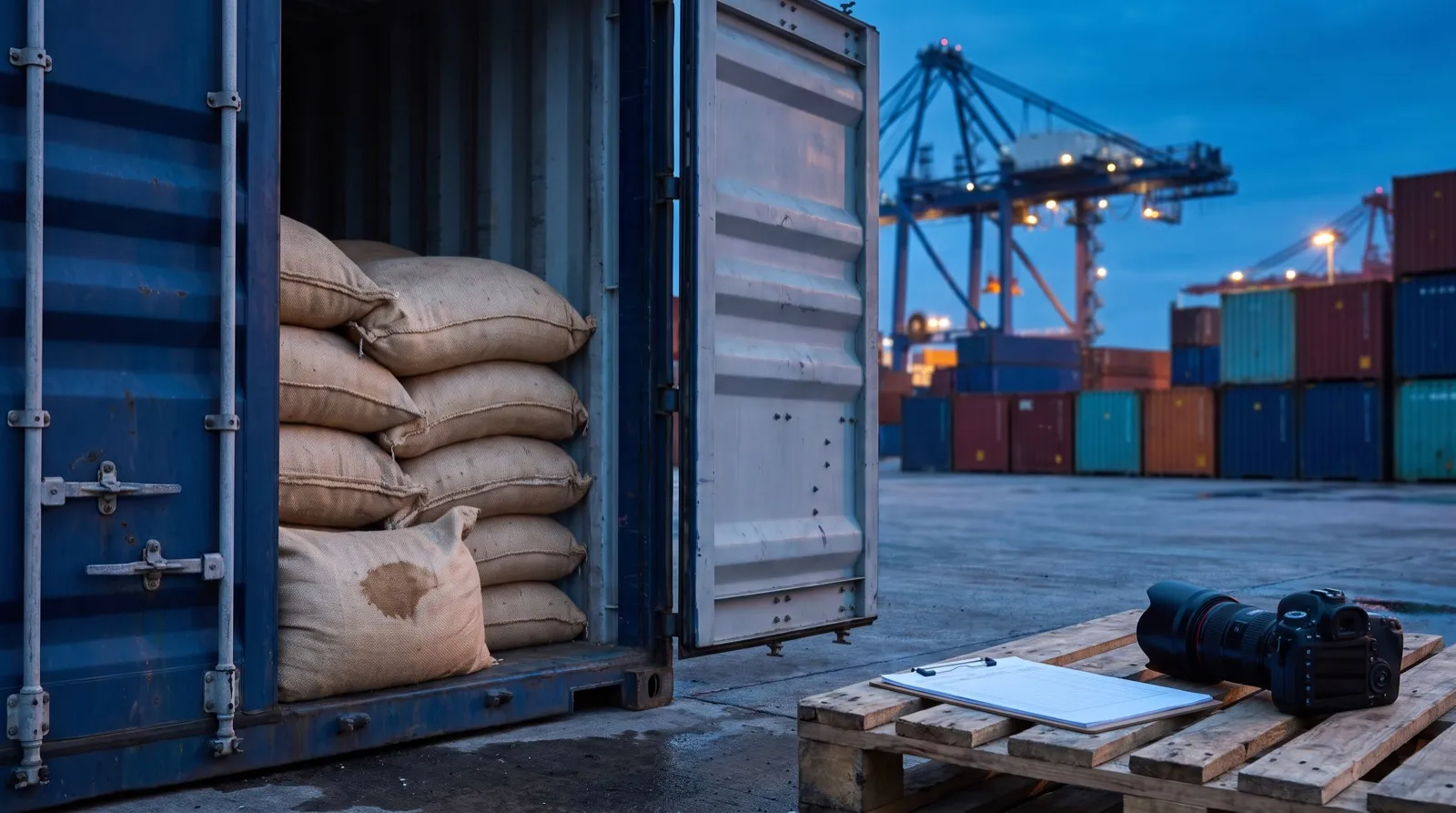
“Rejected” covers three different situations, and each one runs on a different clock. A regulator can detain a container at the border. A carrier can be liable for damage in transit. A buyer can reject goods that don’t match the approved spec. Treating all three the same way, or missing which deadline applies, is how a recoverable loss turns into an unrecoverable one.
This is the playbook for the first 72 hours after a rejection, broken out by which of the three situations a buyer is actually facing.
What actually triggers a container rejection?
Three distinct triggers, each with a different party on the other side of the claim. A regulatory detention comes from the destination country’s food safety authority acting on its own screening, independent of anything the supplier or carrier did wrong in transit. A carrier cargo-damage claim covers physical loss or damage that happened during shipping, water ingress, temperature excursion, container failure. A buyer quality rejection is a commercial dispute: the goods arrived intact and undamaged but don’t match the contracted spec or the golden sample.
Knowing which one applies determines who gets notified first, what evidence gets collected, and which deadline starts running.
Regulatory detention: what an FDA import alert actually means
FDA Import Alert 23-12, “Detention Without Physical Examination of Coconut Due to the Presence of Microbiological Contamination,” lists firms across origin countries including Sri Lanka, the Philippines, India, Vietnam and others, flagged for Salmonella, Listeria monocytogenes and Vibrio risk in fresh, frozen and dried coconut products. Thermally processed canned goods are excluded. The alert traces back to a 1991 cholera-linked coconut milk outbreak and a 2008 Listeria finding in Indian shredded coconut, and it has stayed in force since.
Detention Without Physical Examination (DWPE) means FDA’s screening system holds a shipment automatically the moment it flags a listed firm, with no physical inspection needed to trigger the hold. An importer typically has about ten business days from detention to submit testimony, private laboratory analysis showing the product doesn’t carry the flagged contamination, to request release. Miss that window without an adequate response, and FDA issues a Notice of Refusal.
Once refused, the importer has ninety days from the Notice of Refusal to either re-export the goods or destroy them under CBP and FDA supervision. There is no fourth option. Goods that sit past that window risk being treated as abandoned, at which point CBP can dispose of them directly.
The first 72 hours: notify, document, don’t use
The same discipline applies whichever of the three situations is in play. Notify the counterparty in writing immediately, whether that’s the carrier, the supplier, or both. Photograph everything before anything moves or gets opened further. Do not incorporate, process or resell any portion of the shipment; using goods that are under dispute can forfeit the right to reject them entirely, a point that applies as much to a quality rejection as to a damage claim.
For carrier-side cargo damage, most bills of lading require written notice of visible damage within three days of discharge, and formal notice of loss on an insurance policy is often expected within 24 to 48 hours of discovery. These are short windows measured in hours, not weeks, and they run regardless of whether the underlying cause is still being investigated.
Carrier cargo-damage claims: the survey and the time bar
Get an independent marine surveyor on the container before it is unpacked further, or as early in the process as the situation allows. The survey report is the primary evidence a carrier or insurer will weigh; it documents the extent and likely cause of damage independently of either party’s own account.
Claims against the carrier under the Hague-Visby Rules face a one-year time bar running from delivery, or from the date delivery should have occurred. Liability under those rules is capped, 666.67 SDR per package or 2 SDR per kilogram, whichever figure is higher, so a high-value coconut oil shipment can be substantially underinsured by carrier liability alone. That gap is exactly what marine cargo insurance exists to cover, and why a policy separate from the carrier’s statutory liability belongs in every container programme.
One qualifier worth knowing before filing: carriers are generally exonerated for damage caused by the inherent nature of the goods themselves, decay, spoilage, natural deterioration, unless the carrier’s own actions accelerated it. A coconut cargo that separates or turns rancid from its own chemistry, rather than from a documented temperature excursion, is a harder claim to win on that basis alone.
Buyer quality rejection: what evidence actually holds up
This is a commercial dispute, not a regulatory or carrier claim, and it runs on the golden sample and counter-sample discipline rather than a statutory deadline. A buyer rejecting goods as off-spec needs the original golden sample, ideally a counter-sample pulled at the pre-shipment inspection, and a written notice sent to the supplier before the goods are used or incorporated. See the desk’s note on the golden-sample process for how that evidence gets built before a dispute ever starts.
Without a counter-sample, a quality dispute after arrival comes down to one party’s description against the other’s, with nothing physical from the shipment date to settle it. This is the scenario a counter-sample is specifically built to prevent, and its absence is the single most common reason a legitimate quality claim goes nowhere.
What happens to the goods themselves
Four outcomes cover most rejected containers: re-export back to origin, destruction under customs supervision, transfer into a bonded warehouse for further processing or re-routing, or abandonment to customs once storage time runs out. Destruction under bond typically waives the duty owed, since the importer never takes the goods to market. A bonded-warehouse transfer keeps duty deferred while a buyer decides the next step, useful when a claim is still being negotiated and the goods aren’t yet written off. Abandonment is the default outcome nobody actually chooses; it happens when a decision doesn’t get made before the storage clock runs out.
Claims comparison
| Situation | Notify | Deadline | Evidence needed | Likely outcome |
|---|---|---|---|---|
| FDA DWPE detention | FDA, via customs broker | ~10 business days for testimony | Private lab analysis refuting the flagged contaminant | Release, or Notice of Refusal |
| Refused after detention | CBP/FDA supervision | 90 days from refusal | Re-export or destruction plan | Re-export, destroy, or abandoned |
| Carrier cargo damage | Carrier, insurer | 3 days visible damage; 1 year to file (Hague-Visby) | Independent survey report, bill of lading, photos | Settlement within liability cap, or denial |
| Buyer quality rejection | Supplier, in writing | Before use/incorporation | Golden sample, counter-sample, written notice | Renegotiation, replacement, or dispute |
What this means for buyers
- Persona B (importers/distributors): know before a container ever ships which of the three claim types is most likely for that lane, regulatory, carrier, or quality, and have the evidence chain (surveyor contact, counter-sample protocol, broker relationship) ready before it’s needed.
- Persona A (procurement, CPG): check whether a supplier or origin firm appears on FDA Import Alert 23-12’s list before committing to a new coconut source shipping into the US; a listed firm means every shipment gets detained by default, not just a flagged one.
- Marine cargo insurance is not optional once carrier liability caps are understood; the gap between actual cargo value and the Hague-Visby cap is often substantial for higher-value coconut products.
- Never process, resell or incorporate disputed goods before the counterparty is notified in writing. This single step determines whether a claim stays viable.
- Review Incoterms risk transfer points before a dispute happens, not during one; see the desk’s Incoterms guide for where risk actually shifts between buyer and seller.
FAQ
Can a container be both regulatorily detained and carrier-damaged at the same time? Yes. The two are independent. A detained shipment can also arrive with transit damage, and each claim runs on its own deadline and evidence chain.
Does marine cargo insurance cover a regulatory detention? Generally no. Cargo insurance covers physical loss or damage in transit, not a destination country’s food safety hold. Detention risk is managed through supplier vetting and Import Alert screening, not insurance.
What’s the fastest way to check if a supplier is on an FDA import alert? Search the supplier’s firm name and country against FDA’s public import alert pages directly; a customs broker or import compliance service can also run this check as part of onboarding.
Is a survey report always required for a carrier claim? Not legally required in every case, but a claim without one is far weaker. The survey is the independent evidence a carrier or insurer uses to assess cause and extent.
Who pays for destroying a refused shipment? The importer of record. Duties owed on the shipment are typically waived once destruction is confirmed under bond, but the destruction cost itself is not.
Building claim-ready evidence into a contract from day one is cheaper than rebuilding it after a rejection. Send the desk an RFQ.