
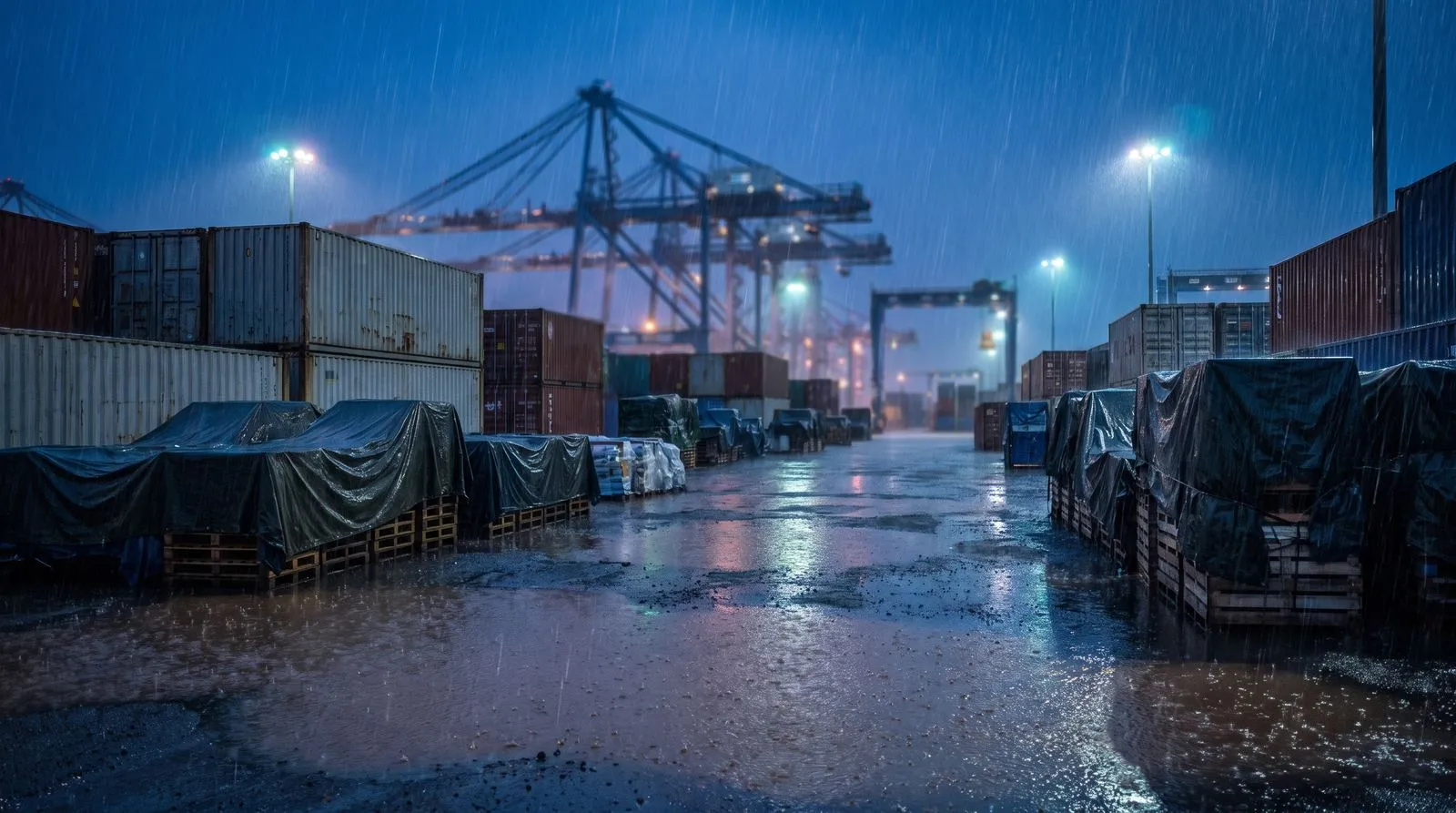
A wet season does little damage to coconut tree yield. It does real damage to copra quality, drying time and port schedules. For a buyer pricing a La Niña year, the exposure sits in the contract clauses, not in the tonnage forecast.
The timing matters because La Niña is not the current event. NOAA’s Climate Prediction Center has run an El Niño Advisory since August 2026, and the WMO seasonal update for November 2026 to January 2027 keeps that warm phase in place through the northern winter. This article covers the opposite swing, the one desks usually start asking about when an El Niño peaks.
Does heavy rain cut coconut yields?
Not on the evidence available. The documented yield losses in this market come from drought. The United Coconut Association of the Philippines estimated that yields fell about 20% in 2024 after the El Niño dry spell, because stressed trees abort flowers and set fewer nuts.
Excess rain is a weaker and more local problem. Waterlogged plots and persistent cloud can slow growth and raise disease pressure, and trade weather reports flagged record rainfall in Camarines Sur in February 2026. The same reports describe mild rainfall deviations as unlikely to stress trees. The Philippine Coconut Authority took a similar line in 2024, saying output would still grow 3% to 5% despite a looming La Niña.
Where does a wet season actually cost money?
At the dryer, on the road and at the berth. Copra has to reach safe moisture quickly. FAO guidance on aflatoxin control sets the target at drying within 48 hours of splitting the nut, with 12% moisture for sun or hot-air dried copra and 16% for smoke-dried. Cloudy or interrupted drying carries a very high aflatoxin B1 risk.
Rain breaks that window. Farmers in sun-drying regions cannot hit the target, trucks stall on flooded roads, and mills receive wetter copra with a higher free fatty acid load. Those are short-term frictions, not a shortage, but they move quotes and delay loading.
| Weather phase | Tree yield effect | Where the cost shows up |
|---|---|---|
| Drought (El Niño) | Flowering and nut set fall, tonnage gap about 12 months later | Price spike, origin allocation |
| Wet season (La Niña) | Small, local, often positive after drought | Copra moisture, aflatoxin rejects, road and port delays |
| Typhoon-enhanced monsoon | Local crown and nut damage | Harvest gaps, vessel delays |
Why would La Niña follow this El Niño at all?
Because ENSO swings, and an El Niño that peaks around December 2026 usually decays into neutral conditions before the next phase is called. No agency has forecast a La Niña for 2027 in the material we reviewed. Treat it as a scenario to price, not a forecast.
The sibling risk is already on the calendar. Our note on the 12-month lag in coconut supply sets out why nut set in late 2026 decides tonnage in late 2027. A wet 2027 would not undo that. It would add a quality and logistics layer on top of a tight crop.
What did the desks learn from the last wet-dry swing?
That the price signal and the weather signal are out of step. Coconut oil averaged USD 2,480/mt in 2025 and traded at USD 1,924/mt in July 2026, per the World Bank Pink Sheet of August 2026. The recovery was a crop already harvested. USDA’s Philippines Oilseeds Annual of April 2026 forecasts copra output at 2.65 million tonnes for marketing year 2026/27, up 1.9%.
Rain-driven disruption barely appears in annual tonnage. It appears in the copra cycle as weeks of delay and rejected lots.
How should a desk price a wet-season delivery window?
Separate the two risks and price each on its own clock. Tonnage risk is a crop-cycle question: nut set this season decides supply roughly a year out, and no amount of rain in the delivery month changes it. Delivery risk is a calendar question: it depends on the loading port, the trucking route from the mill and how many days of rain the shipment window can absorb.
A practical buyer test is to ask the seller three things before signing. First, how does the mill dry its copra or fresh nut intake when the sun is absent, and is there a mechanical dryer on site? Second, what moisture and free fatty acid limits apply at loading, and who pays for a lot that fails them? Third, which port does the cargo load from, and what happens to the laycan if a vessel waits on weather?
Those answers turn a vague weather worry into contract wording. A buyer who has them can accept a wet origin. A buyer who lacks them is carrying the risk without being paid for it.
Multi-origin cover is the cheapest hedge. Origins do not flood together, and a second qualified mill on a different rainfall system keeps a programme moving when one coast is under water. The qualification work takes months, which is why it belongs before the wet season, not during it.
What this means for buyers
- Procurement managers (persona A): keep moisture, FFA and aflatoxin limits in every contract, whatever the ENSO phase. Ask for the COA per lot and a clear rejection route.
- Importers and distributors (persona B): build two to three weeks of slack into wet-season loading dates, and agree who carries demurrage when a vessel waits on flooded trucking.
- Brand owners (persona C): a wet origin can still ship good desiccated coconut if the mill controls drying. Audit the dryer, not the rainfall chart.
- Traders and brokers (persona D): price drought into the 2027 crop and wet weather into the delivery schedule. They are separate trades.
FAQ
Is La Niña forecast for 2027? Not in the sources we reviewed. NOAA has an El Niño Advisory in force, and the WMO outlook keeps El Niño through the northern winter. A La Niña is a scenario, not a forecast.
Does a wet season raise coconut prices? Rarely through yield. Short-term quotes can firm when rain delays drying and loading, but tonnage losses come mainly from drought, with a lag of about a year.
What is the safe moisture level for copra? FAO guidance gives 12% for sun or hot-air dried copra and 16% for smoke-dried, reached within 48 hours of splitting the nut.
Which origins are most exposed to wet-season disruption? Sun-drying regions with weak road access. Sri Lanka, India, Vietnam, Indonesia and the Philippines all have wet-season pockets, so qualify more than one origin.
Does wet weather affect desiccated coconut quality? It can, through the copra or fresh-nut intake stage. A spec with moisture, colour and microbiological limits catches most of it.
Pricing a wet-season delivery window across origins? Send the desk an RFQ and we will quote the spec.