
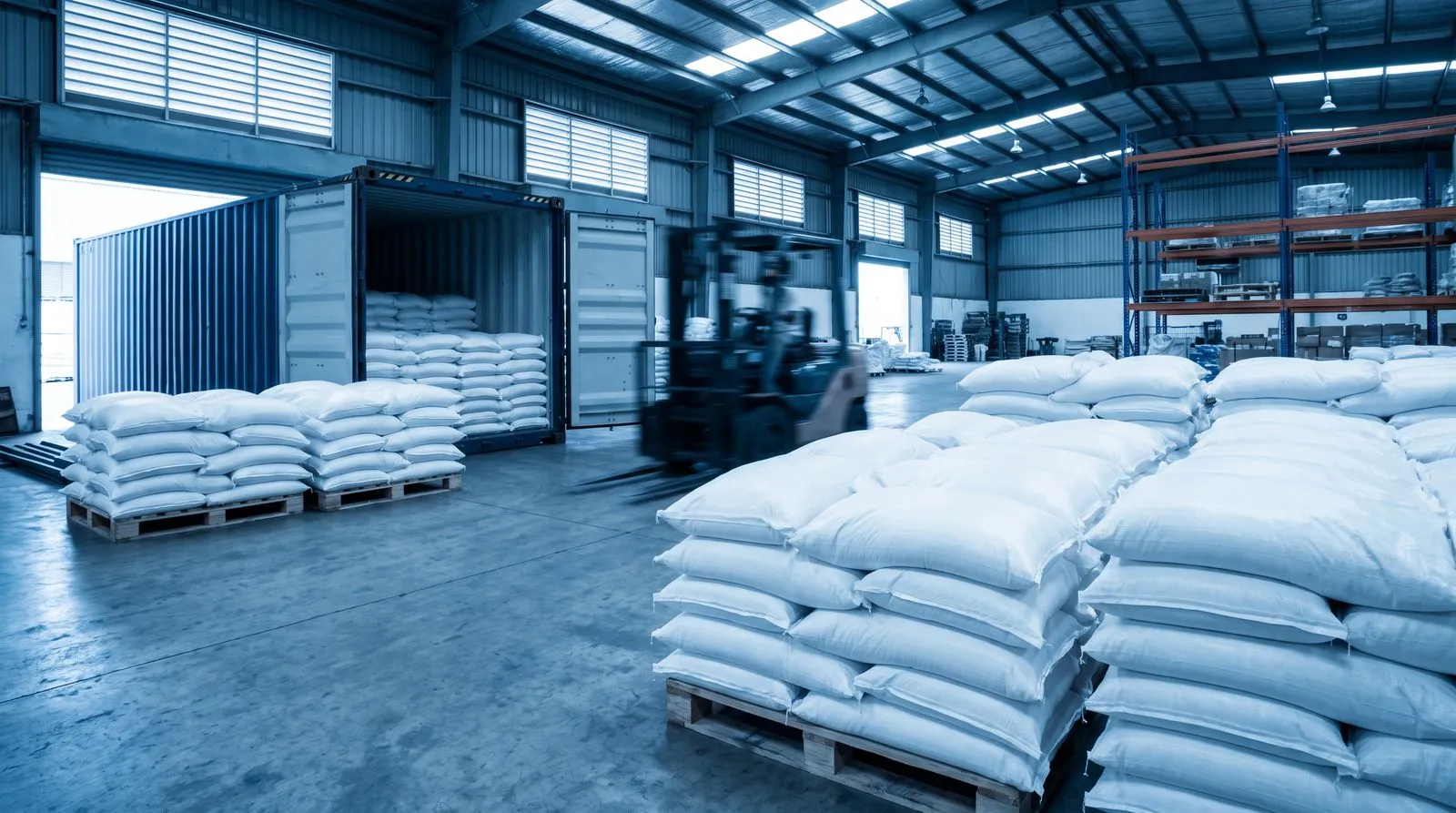
The minimum order quantity for coconut ingredients is usually one full container load per SKU per origin. That is not a sales rule. It is the point where freight, documents and the factory’s production run stop adding cost to every tonne you buy.
For a brand owner moving past a co-packer’s supply, this matters in cash. Order below the container line and the buyer pays for empty space, an extra set of export documents and a short run at the mill. Order above it without a plan and the buyer carries stock that can age out of spec. The job is to find the volume where the per-tonne cost flattens and the shelf life still covers your usage.
What is a minimum order quantity in coconut trading?
A minimum order quantity (MOQ) is the smallest volume a seller will contract for one product, one spec and one shipment. In coconut ingredients it is set by three limits at once: what fits in the box, what the factory will run on one spec, and what the documents cost per shipment.
Our own trading terms state the default plainly: the minimum is typically one FCL, with samples available for spec approval. FCL means full container load, a container booked by one shipper for one consignee. Everything below that line is a negotiation over who absorbs the fixed costs.
Why does the container set the floor?
Freight is priced per box, not per tonne. A standard 20ft dry container holds about 33 cubic metres, according to DSV’s dry container reference. Its payload limit is far above what bagged coconut weighs, so a coconut load runs out of space long before it runs out of weight.
That makes desiccated coconut a volume cargo. Exporter listings we checked in October 2026 quote between 12 and 17 tonnes of 25 kg bags in a 20ft, depending on palletising and bag type. The spread is real: floor-loaded bags fill the box better than pallets, but take longer to unload at destination.
Liquids work differently. Coconut oil moves in flexitanks, single-use bags fitted inside a 20ft container. MSC’s flexitank guide puts a typical bag at 10,000 to 24,000 litres. Below a flexitank’s worth, oil drops to drums or IBCs, which cost more per litre to fill, ship and handle.
| Format | Typical unit | What sets the minimum | Below-minimum option |
|---|---|---|---|
| Desiccated coconut | 25 kg bags, 20ft FCL | Container cube | Mixed-SKU FCL or LCL |
| Coconut oil (RBD/VCO) | Flexitank, 20ft | Bag volume and fill level | Drums or IBC |
| Coconut milk/cream, retail cans | Cartons, FCL | Can line run and label print | Shared run on stock label |
| Coconut milk powder | Bags or cartons | Spray-dryer campaign | Join a scheduled campaign |
| Coconut sugar, flour | 25 kg bags | Container cube | Consolidate with other SKUs |
What does a half container actually cost?
The answer is in the fixed costs, which do not shrink with the order. Every shipment carries one set of export documents: phytosanitary certificate, certificate of origin, COA (certificate of analysis), fumigation or pest control records where required. Every shipment also carries one inspection, one customs entry at destination and one set of port charges.
LCL (less than container load) moves part-loads through a consolidator’s shared box. It is billed on the revenue ton, the greater of one cubic metre or 1,000 kg, as Cogoport’s chargeable-weight guide explains. Coconut is light for its volume, so you pay by the cubic metre. You also add terminal handling at both consolidation points, and more days in transit.
Illustrative math helps here. The International Coconut Community’s June 2025 market review put Philippine desiccated coconut at USD 2,400 to 2,650 per tonne and Sri Lankan at about USD 3,200. Those are 2025 reference points, not today’s offer.
| Order size | Product value at USD 3,200/t | Fixed shipment costs | Effect per tonne |
|---|---|---|---|
| 12 t (one 20ft) | USD 38,400 | One document set, one entry | Spread over 12 t |
| 6 t (half box, LCL) | USD 19,200 | Same document set, same entry | Spread over 6 t, so double |
| 24 t (two 20ft, one order) | USD 76,800 | Two boxes, one contract | Lowest per tonne |
Treat the fixed-cost column as a direction, not a quote. Documents, inspection and destination fees vary by lane. The point holds on every lane: halve the order and each tonne carries twice the paperwork.
How does the factory’s run affect the MOQ?
Mills schedule by spec. A fine-grade, high-fat desiccated coconut with a buyer-specific SO2 limit and a custom bag print is a separate run from the mill’s standard grade. Each changeover costs line time and a cleaning cycle.
For packed coconut milk, the floor is often the label, not the liquid. Can printing and carton printing come with their own print minimums. A brand owner asking for 500 cartons of a private-label can may face a print cost that outweighs the product.
The desk sizes MOQs by asking the mill one question first: which of the buyer’s specs already match a run you are making this month?
If the answer is most of them, the minimum drops.
How do buyers get below one FCL without paying for empty space?
Three structures work, and each has a cost the buyer should see before choosing it.
Mixed-SKU containers. Two or three coconut products from the same origin share one box. Desiccated coconut, coconut flour and coconut sugar in 25 kg bags stack together well. Each SKU still needs its own COA and lot code, so ask for that in the contract. Our post on FCL vs LCL for coconut ingredients covers the stowage side.
Call-off contracts. The buyer contracts a full container or more, but takes delivery in parts from a warehouse. This trades freight savings for storage and holding cost. Our note on consignment and VMI structures sets out who owns the stock and when.
Joining a scheduled run. For powders and private-label cans, the buyer slots into a run the factory is already making on a matching spec. Lead time follows the factory’s calendar, not the buyer’s.
What should go into the contract?
Write the MOQ as a number with its basis: tonnes or cartons per SKU, per spec, per shipment. A bare “1 FCL” leaves room for argument about fill level and pallet count.
Add the tolerance. Bulk coconut contracts commonly allow a plus or minus percentage on quantity because container fill varies by bag and pallet. Agree the figure and who decides it at loading.
Tie the volume to shelf life. A full container of desiccated coconut that takes eight months to use may age past the buyer’s internal limit. Our post on safety stock for coconut ingredients shows how to size the buffer against usage.
What this means for buyers
- Brand owners (C): Ask for the MOQ per SKU and per print, separately. The label minimum is often the binding one.
- Procurement managers (A): Compare offers at landed cost per tonne, not FOB price. A cheaper FOB on a half container can land dearer.
- Importers and distributors (B): Mixed-SKU containers from one origin keep the box full while you test a new line.
- Traders (D): Two-box orders on one contract earn the best per-tonne terms, provided the buyer can absorb the stock.
FAQ
What is the usual minimum order for desiccated coconut? One 20ft full container load per origin, which exporter listings put at roughly 12 to 17 tonnes in 25 kg bags. Mixed-SKU loads and call-off contracts can bring the effective minimum lower.
Can I order coconut oil in less than a flexitank? Yes. Drums and IBCs ship smaller volumes, but cost more per litre to fill, handle and ship. A flexitank holds 10,000 to 24,000 litres.
Why is LCL more expensive per tonne? LCL is billed per cubic metre, adds handling at consolidation points and still carries a full document set. Coconut is bulky for its weight, so it pays the volume rate.
Is the MOQ negotiable? Often. It drops when your spec matches a run the factory is already making, or when the desk can combine your order with other SKUs from the same origin.
Sizing a first order and unsure where the container line falls? Send the desk an RFQ with your spec and monthly usage.