
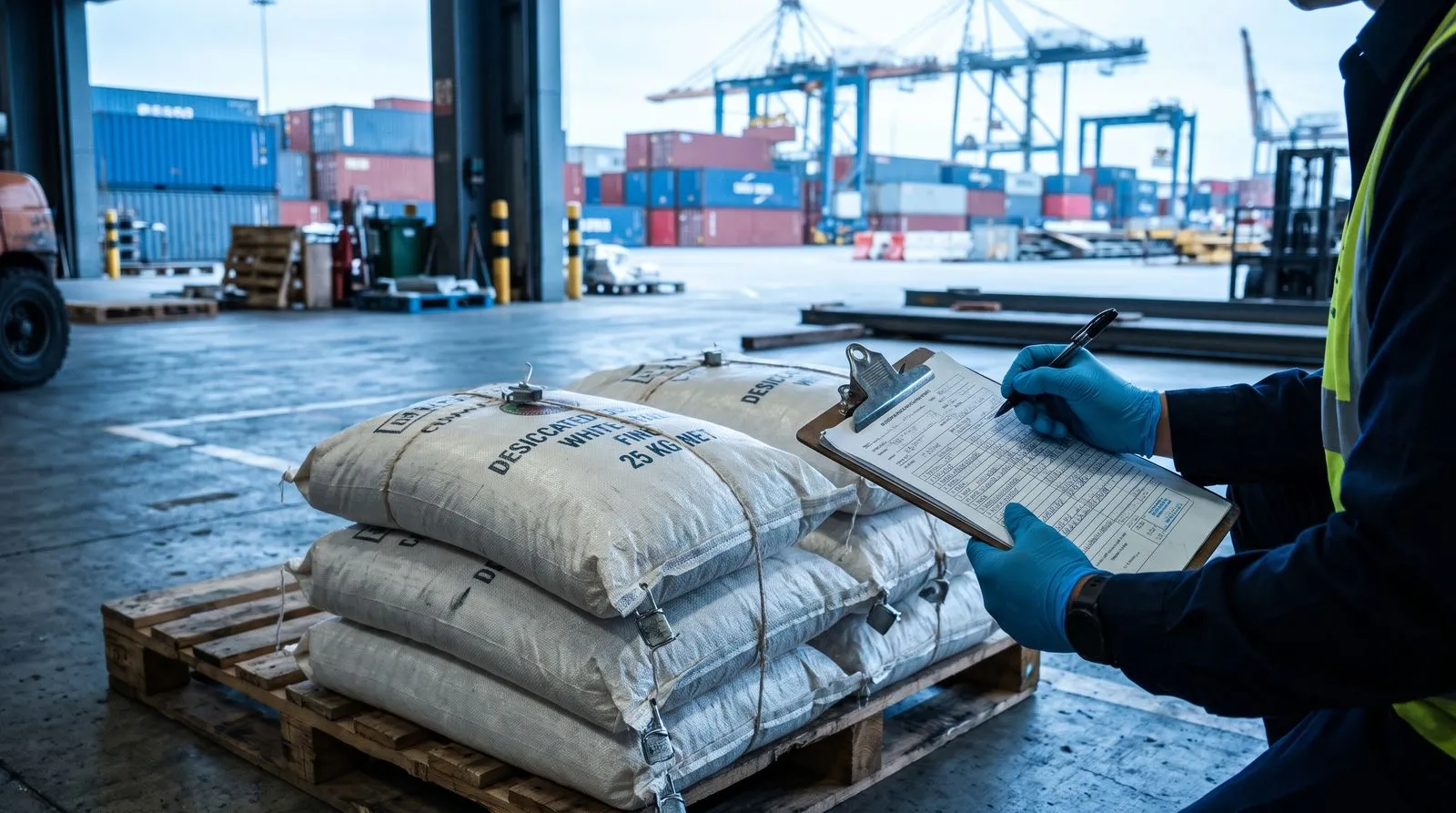
Every consignment of coconut ingredients entering Japan needs an import notification under the Food Sanitation Act, filed by the importer before customs clearance. Quarantine station staff review the paperwork, and some cargo is also sampled. A shipment that fails cannot be sold as food in Japan. It must be re-exported, destroyed or diverted to non-food use, which usually costs more than the cargo is worth.
For a procurement manager, the practical question is not whether Japan inspects coconut. It is how much of the risk sits in documents you can fix before sailing, and how much sits in the lab result you cannot. This note walks through the sequence and the paperwork that shortens it.
What does the Food Sanitation Act require for each coconut shipment?
The importer of record submits a notification form to the quarantine station of the Ministry of Health, Labour and Welfare (MHLW) at the port of entry, on paper or electronically. MHLW’s imported foods pages describe the route: food sanitation inspectors review the notification and the goods, and cargo that complies receives a certificate of notification.
Article 27 of the Act makes the notification mandatory for each shipment. A simplified advance route lets the form go in up to 7 days before arrival, according to a JETRO-hosted import procedures guide. That guide is dated, so confirm the current filing window with your Japanese importer or customs broker.
Goods brought in without notification cannot be used for sale or business purposes. This is the first point to settle in the contract: the Japanese buyer, not the exporter, is the notifying party.
How do the three inspection routes differ?
MHLW uses three levels of scrutiny, and the route a coconut lot lands in depends on the product’s compliance history, not on the buyer’s intent.
| Route | Who tests | Does cargo wait? | Triggered by |
|---|---|---|---|
| Document review only | No one | No | Routine, compliant history |
| Monitoring inspection | Quarantine station samples | Usually no; clearance can proceed while the sample is tested | Annual plan by food group and test item |
| Inspection order | Importer pays a registered laboratory | Yes, until results are in | Violation history or overseas information |
MHLW’s FY2026 notice, issued on 31 March 2026, sets the framework. The notice lists foods and exporters subject to orders, and the ministry says inspections can start at any time if imports of an item surge or a new sourcing country appears. The same plan allocates about 100,000 monitoring specimens across all foods, with mycotoxins one of the tested categories.
The consequence is simple. A first shipment from a new Sri Lankan or Indonesian mill is more likely to meet a sample than the tenth shipment on a clean record.
A monitoring sample does not stop the container. A failed one can still trigger an order on the next lot.
Which test items matter most for coconut?
Three issues decide most outcomes for desiccated coconut, coconut flour and powders.
Aflatoxin. Japan applies a total aflatoxin control limit of 10 µg/kg across foods, a figure that appears in municipal guidance dating from 2011 and in MHLW monitoring tables. The specific listings were amended several times in 2026, so the current text is the one to check. Our note on aflatoxin testing in coconut ingredients covers sampling plans and lab methods.
Sulphites. Japan restricts sulphur dioxide residue by food category. We found no residue limit specific to desiccated coconut in the sources reviewed, so do not assume the EU or GCC figure carries over. Compare it against our SO2 limits for desiccated coconut, then ask the Japanese importer to confirm the category the product will be filed under.
Additives and ingredients. For coconut milk, cream and sweetened products, any stabiliser or preservative must be on Japan’s permitted additive list. The JETRO guide notes that a certificate with a detailed ingredient description and a short processing outline can accompany each shipment to speed the process.
What documents should be ready before sailing?
Think of the file as the one the inspector will open first. Most delays come from a missing line, not a failed test.
- Commercial invoice and packing list, with product description matching the notification wording
- Bill of lading and country of origin
- Certificate of analysis from the producing plant, showing aflatoxin and moisture, and sulphite where used
- Ingredient statement and a one-page process flow for any processed product
- A prior analysis certificate if the same product has passed earlier, which the JETRO guide says can be reused to expedite
Our coconut import document pack lists the common set across destinations. Japan adds the notification layer on top.
Timing deserves a line of its own in the shipping schedule. If the advance filing window applies, the notification can go in about a week before arrival, which leaves time to correct a description mismatch while the vessel is still at sea. Filing on the day of arrival leaves no such margin, and a query from the station then sits against storage and demurrage charges. Ask the Japanese importer to confirm the filing date in writing when the booking is made.
What about HACCP?
The June 2018 amendment of the Food Sanitation Act made HACCP-based sanitation control the standard for food business operators in Japan, effective 1 June 2021, as Tokyo Metropolitan Government’s guidance describes. Importers sit inside the system. Sources we reviewed do not state precisely what a foreign plant must show. Japanese importers usually ask for a recognised food safety certificate from the mill, so expect that request in qualification.
What this means for buyers
- Procurement manager (Japan-bound): name the Japanese importer of record in the contract and agree who pays for an inspection order test.
- Importer or distributor: hold a recent certificate of analysis per lot. A reusable prior result shortens clearance.
- Brand owner: confirm the additive status of every ingredient in milk, cream and sweetened lines before the first order.
- Trader or broker: price a first shipment from a new origin with a sampling allowance, since new sourcing countries can trigger inspection.
FAQ
Does Japan test every coconut shipment? No. MHLW samples under an annual monitoring plan, and orders testing for higher-risk items. Every shipment still needs a notification.
Who files the import notification? The importer in Japan files it with the quarantine station. The exporter supplies the documents the importer needs.
Can cargo be released before test results arrive? Under monitoring inspection, yes. Under an inspection order, no. Cargo waits for a registered laboratory result.
What happens to a failed shipment? It cannot be imported as food. It is re-exported, destroyed or diverted to non-food use.
Need a spec locked for a Japan-bound shipment? Send the desk an RFQ on the contact page, and see the desiccated coconut range.