
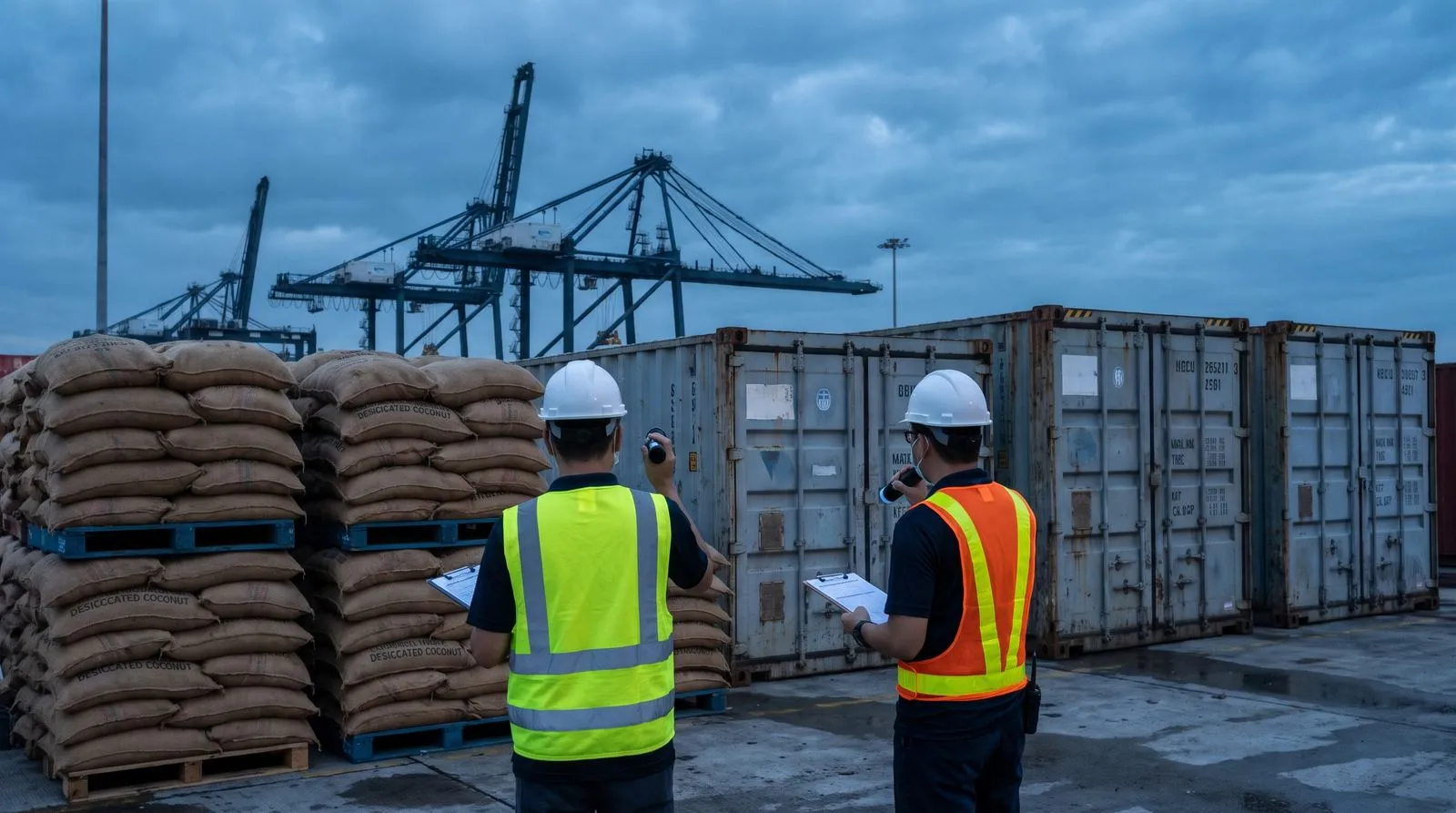
A company importing coconut ingredients into Singapore needs a Singapore Food Agency (SFA) registration, not a paid licence, and then an import permit for every consignment. For processed food such as desiccated coconut, SFA lists the registration as free and processed in one working day for a complete application. The permit carries no fee for processed food. The cost is in the setup lead time and in clerical errors on the permit.
Singapore also sits on the transit path for a lot of coconut cargo, so the rules matter twice: once for goods landing in the city-state, and once for buyers who confuse a transhipment with an import. This note covers the first case. It sets out who needs what, what the prerequisites are, and where shipments stall.
Does an importer need a licence or a registration?
SFA treats importers of food for commercial sale as regulated regardless of business type. Parcel-post food imports and samples are deemed commercial too, according to SFA’s guidance for importing food.
The category decides the instrument. Meat and fish, fresh fruit and vegetables, and shell eggs need a licence. Processed food and food-contact articles need a registration. Singapore Customs describes processed food as all food products and food-nature supplements, excluding meat, fish, fresh fruit and fresh vegetables.
Desiccated coconut, coconut milk and cream, coconut oil, flour and sugar fall outside the licence categories, so a registration is the reading we work to. SFA’s pages do not name coconut ingredients individually. Confirm the classification of your specific product with SFA’s food classification tool before the first booking.
| Item | Instrument | SFA fee | Processing time |
|---|---|---|---|
| Processed food (e.g. desiccated coconut) | Registration | Free | 1 working day, complete submission |
| Meat and fish | Licence | $84 a year | Varies by product |
| Fresh fruit and vegetables | Licence | $378 a year | Varies by product |
| Each consignment, processed food | Import permit via TradeNet | No fee | At least 1 working day |
Fees and times come from SFA’s application and fees page, updated October 2026. Validity wording for the processed-food registration differs between SFA pages, so check the term on the GoBusiness entry when you apply.
What must be in place before applying?
The prerequisites take longer than the application. SFA’s requirements page lists these:
- A company registered with ACRA and holding a valid UEN.
- A TradeNet account activated with Singapore Customs under that UEN.
- A GIRO account with SFA, with the original GIRO form submitted.
- SingPass or CorpPass access to the GoBusiness portal, with a CorpPass administrator authorising the user.
Three of the four are sequential. TradeNet activation comes before the SFA application, and GIRO setup can run in parallel. A foreign buyer setting up a Singapore entity for the first time should budget weeks for these, not days. A buyer using a Singapore trading desk as importer of record skips the setup entirely, which is one reason regional programmes route through one.
How does the per-consignment permit work?
Once registered, the importer files an import permit through TradeNet for each consignment. The permit declares the SFA registration number in the licence or certificate field, plus the product code, quantity, unit and brand or manufacturer name. HS codes drive the product code lookup. Our note on coconut HS codes and landed cost covers the classification side.
Approval returns a Cargo Clearance Permit (CCP), the document a port or checkpoint officer asks for. Submit before 5:30pm Monday to Thursday or 5:00pm on Friday for next-working-day approval. Eve-of-holiday cut-offs fall at noon.
Read the conditional messages printed on the CCP. They can state that an inspection is required, and ignoring one is an enforcement matter.
Will SFA inspect or sample the cargo?
Possibly. All food imports can be inspected on arrival, without a booking, and SFA can take samples for laboratory analysis. If the CCP gives a booking code, SFA responds within one working day. A hold-and-test order means the goods cannot be sold until results clear. SFA does not charge for inspection.
Goods that fail can be returned, re-exported or, for serious non-compliance, destroyed. The source, exporter or importer can also be suspended.
For ordinary shelf-stable coconut ingredients the practical defence is the paperwork: a clean COA, a matching invoice and a spec that already meets Singapore’s Food Regulations. SFA advises attaching documents such as health certificates and lab reports to the TradeNet application to avoid delays. Strict supporting documents are required only for products under tighter import control. See the import document pack for what we assemble per shipment.
What changes under the Food Safety and Security Act?
The Food Safety and Security Act 2025 consolidates Singapore’s food legislation and is being brought into force in tranches. The first tranche took effect on 28 November 2025 and covers defined food: novel food or genetically modified food without pre-market approval. For a plain coconut ingredient it changes little unless a novel or GM component is involved.
SFA’s processed-food import pages still cite the Sale of Food Act 1973 at the time of writing. Dates for later tranches are not published on the pages we reviewed, so treat any claim about a new import regime date as unconfirmed.
What does this mean for buyers?
- Procurement managers (A): Ask whether the importer of record holds a current SFA processed-food registration before you accept a DAP Singapore quote.
- Importers and distributors (B): Factor TradeNet and GIRO setup into onboarding. The registration itself is quick, the prerequisites are not.
- Brand owners (C): If you sell into Singapore, your co-packer’s registration does not cover your import. The importer files each permit.
- Traders (D): Transhipment through Singapore follows a different path from import for consumption. Check the route before assuming a permit is needed. Our piece on bonded warehousing sets out the holding options.
FAQ
Do I need an SFA licence to import desiccated coconut into Singapore? No licence. SFA requires a registration for processed food, which is free and processed in one working day for a complete application. You also need a TradeNet import permit for each consignment.
What is a Cargo Clearance Permit? The CCP is the approval SFA issues through TradeNet for a single consignment. Print it for inspection and border clearance, and read any conditional messages on it.
Does SFA charge a fee per consignment of processed food? SFA lists no permit fee for processed food. Meat, fish and fresh produce licences carry fees. Check the current fee schedule before budgeting, as SFA updates it.
Can SFA sample my coconut shipment? Yes. Any food import can be inspected or sampled on arrival, at no fee. A hold-and-test order stops sale until laboratory results clear.
Is the Sale of Food Act still the governing law? SFA’s processed-food import pages still cite it. The Food Safety and Security Act 2025 is being phased in, and the first tranche in November 2025 covers novel and GM food.
Need a Singapore-cleared coconut programme with the paperwork handled? Send the desk an RFQ.