
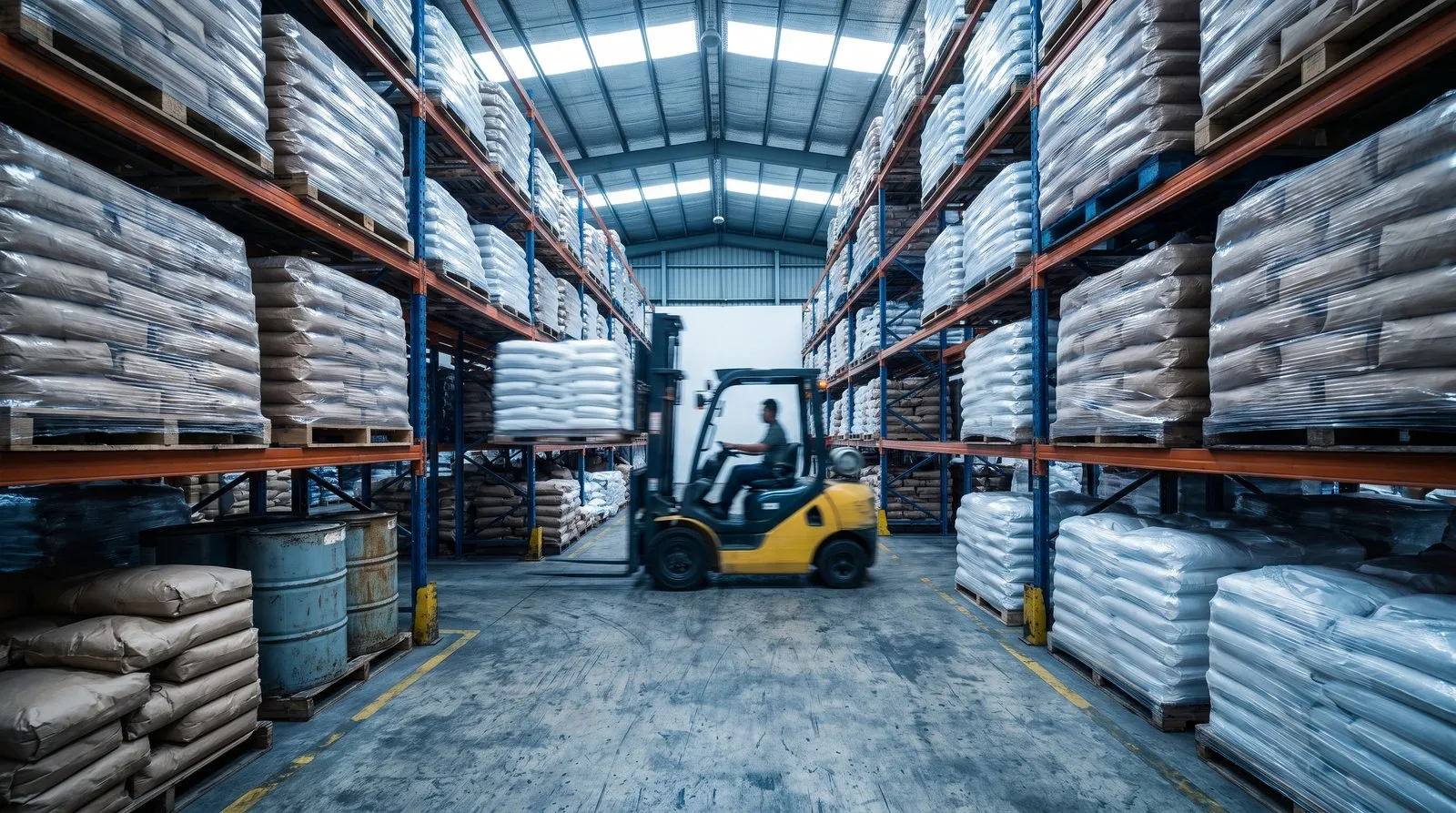
For coconut ingredients, bonded warehousing in Singapore means one of two structures: a Free Trade Zone at the port for cargo passing through, or a Zero-GST Warehouse for stock that sits for months. Coconut products carry no import duty in Singapore, so the only tax a bonded structure suspends is the 9% GST on landed value. For an importer holding hub stock for regional re-export, that is a tax deposit on every tonne avoided.
The second question is physical. Singapore runs at about 82% mean relative humidity and a 24-hour mean temperature between 26.8°C and 28.6°C in every month. Desiccated coconut and coconut milk powder tolerate neither number well. A bonded licence solves the tax. It does nothing for the product.
Which Singapore scheme applies to coconut inventory?
The Zero-GST Warehouse Scheme, not the Licensed Warehouse Scheme. Singapore Customs levies duty on four categories only: intoxicating liquors, tobacco, motor vehicles, and petroleum and biodiesel blends. Everything else, including desiccated coconut, coconut oil and coconut milk, is non-dutiable and belongs in a Zero-GST Warehouse, where GST is suspended for an indefinite period and becomes payable only when goods are removed for local consumption.
A Zero-GST Warehouse is a Customs-licensed private premises, either the importer’s own or a 3PL’s. Three licence types map to bands under Customs’ TradeFIRST assessment: Type I needs the Standard band, Type II the Intermediate band, Type III the Enhanced or Premium band. Annual fees, effective January 2025, are S$1,390 for average stock up to S$1 million, S$3,480 up to S$5 million, and S$5,570 above that. Applicants need GST registration, a Customs Account, a secured storage facility and a clean compliance record, and Customs may require a banker’s guarantee.
Most coconut importers never apply. The practical route is a 3PL that already holds a Type II or Type III licence and sells bonded pallet positions, which is the model the desk uses for hub stock.
When is a Free Trade Zone enough?
When the cargo is passing through rather than sitting. Every sea or air consignment lands in an FTZ first, and duty and GST stay suspended until goods are consumed in the zone or enter customs territory.
Jurong Port’s storage rules show the shape of it. Transhipment cargo under a liner scheme gets a 14-day free storage period, non-liner transhipment gets 7 days, and local import or export cargo gets 72 hours. Beyond that, unauthorised storage costs S$2.50 per tonne per day. On a 20-tonne container that is S$50 a day, survivable for a week and ruinous for a quarter.
The FTZ is a quay. The Zero-GST Warehouse is a shelf.
What is the GST suspension actually worth?
Nine percent of landed value, as cash, for as long as the stock sits. Singapore’s GST has been 9% since 1 January 2024. On a 13-tonne container of Philippine desiccated coconut at the International Coconut Community’s 19 September 2026 FOB print of US$2,980 per tonne, the goods alone are about US$38,700. Import GST on that, before freight and insurance join the taxable value, is roughly US$3,500 per container. Illustrative; run your own invoice values.
Who the stock is for changes what that number means. Stock destined for re-export never crystallises GST, because re-export sits outside its scope. Stock destined for Singapore customers attracts import GST that a GST-registered importer recovers as input tax, so the saving is purely timing, which still matters at 9% a container across a 90-day working-capital cycle.
Two IRAS approvals, the Major Exporter Scheme and the Import GST Deferment Scheme, handle the local-sale case without a bonded warehouse. Both need a clean compliance history.
| Structure | Who approves | GST on coconut stock | Dwell | Fits |
|---|---|---|---|---|
| Free Trade Zone | Port or airport operator | Suspended | Days to weeks, then per-tonne charges | Transhipment, re-nomination |
| Zero-GST Warehouse | Singapore Customs (TradeFIRST) | Suspended indefinitely, payable only on local removal | Months | Hub stock for re-export, consignment |
| Major Exporter Scheme | IRAS | Suspended at import | n/a | Export-heavy importers also selling locally |
| Import GST Deferment Scheme | IRAS | Deferred to the GST return | n/a | Local distributors wanting cash-flow relief |
What does Singapore’s climate do to coconut stock?
It ages stock faster than the spec sheet assumes. CBI’s market-entry guidance for desiccated coconut calls for storage at 26°C or lower and gives 12 months of shelf life for sulphited product and 9 months for unsulphited organic. The Meteorological Service Singapore reports a 24-hour mean that never drops below 26.8°C in any month.
Coconut milk powder is worse. A storage study by Bakar, Hassan and Ahmad held spray-dried coconut milk powder at 30°C and 80% relative humidity, close to a Singapore afternoon, and found lipid oxidation limited shelf life to four months in aluminium laminate and six weeks in polypropylene. Supplier specifications quote 24 months. The gap is the climate.
RBD coconut oil in sealed drums and aseptic coconut water tolerate ambient conditions, as the table shows. Chilled coconut water, at 15 to 25 days, cannot be hub-stocked at all. The shelf-life post covers the chemistry behind each limit.
| Product | Supplier shelf life | Storage ceiling | Singapore ambient? |
|---|---|---|---|
| Desiccated coconut, sulphited | 12 months (CBI) | 26°C or lower, dry | No: conditioned, dehumidified room |
| Desiccated coconut, organic | 9 months (CBI) | 26°C or lower, dry | No |
| Coconut milk powder | 24 months (spec) | Dry; 4 months at 30°C and 80% RH in foil | No |
| RBD coconut oil, drums | 12 months (TDS) | 30°C or lower | Marginal: shaded, sealed |
| Coconut water, aseptic | 12 months | Below 35°C | Yes |
Copra and desiccated coconut also attract the copra beetle and the merchant grain beetle, both recorded on imported Asian coconut cargo. Write the phosphine fumigation protocol and the air-conditioning specification into the 3PL contract. The Customs licence covers neither.
What does bonded storage cost in Singapore in 2026?
More than last year, and rising. Cushman & Wakefield’s Q1 2026 data puts prime logistics ground-floor rent at S$1.92 per square foot per month and warehouse upper-floor space at S$1.49, with warehouse vacancy at 5.6%. A 3PL quoting bonded pallet positions prices off those numbers plus the air-conditioning load, so get three quotes. A 20ft of desiccated coconut in 25 kg bags carries 12 to 14 tonnes on 9 to 10 pallets; a flexitank of coconut oil carries about 20 tonnes with no pallets at all.
Then add cost of carry. ASCM practitioners put the rule of thumb at 15% to 25% of inventory value per year once cost of money, insurance, handling, deterioration and obsolescence are included. On the US$38,700 container above, that is US$5,800 to US$9,700 a year before storage, which is why the safety-stock post sizes the buffer first.
Market timing cuts both ways. Coconut oil CIF Rotterdam ran close to US$2,990 per tonne at its 2025 peak and printed US$2,080 on 19 September 2026, so hub stock bought at the top is a write-down waiting to be booked. Bonded stock does protect against shortages like March 2025, when brokers reported no desiccated coconut available for prompt shipment.
What does SFA require for food held in Singapore for re-export?
Less than importers fear. Importing processed food such as desiccated coconut or coconut oil requires a free processed-food import registration with the Singapore Food Agency, processed in one working day, plus a Cargo Clearance Permit for each consignment. Transhipment needs only a trader’s licence and the same permit.
Ambient dry-food storage sits under SFA’s Food Storage Warehouse registration, which is free and valid for one year. A cold store licence is required only for chilled or frozen meat and seafood. For re-export, SFA issues an Export Health Certificate for imported food products; apply before the goods ship.
What this means for buyers
- Importers and distributors (Persona B): Ask the 3PL for its Zero-GST licence type before the rate card. Type III carries the strictest record-keeping.
- Procurement managers (Persona A): Specify conditioned storage at or below 26°C for desiccated coconut and milk powder, with temperature and humidity logs attached to each call-off.
- Brand owners (Persona C): A bonded consignment position lets a supplier hold your buffer without you importing it. The consignment and VMI post covers the clauses.
- Traders (Persona D): Title can change hands inside an FTZ or Zero-GST Warehouse without a GST event on each leg; see why buy through a Singapore desk.
- Everyone: Match the structure to dwell time: FTZ for days, Zero-GST Warehouse for months, never ambient for dried coconut.
FAQ
Is a bonded warehouse the same as a Licensed Warehouse in Singapore? No. Licensed Warehouses hold dutiable goods: liquor, tobacco, vehicles and petroleum. Coconut products are non-dutiable, so the correct bonded structure is a Zero-GST Warehouse licensed by Singapore Customs, where GST is suspended until goods leave for local consumption.
Does bonded storage save money if I sell the coconut in Singapore? Only on timing. A GST-registered business recovers import GST as input tax. The suspension defers the 9% cash outlay until removal, but the tax is recovered either way. The real saving comes on stock that is re-exported.
How long can coconut cargo sit in a Free Trade Zone? Customs sets no cap for non-dutiable goods, but the terminal operator charges once its free period ends. Jurong Port allows 14 days for liner transhipment and 72 hours for local liner cargo, then S$2.50 per tonne per day.
Can desiccated coconut be stored at ambient temperature in Singapore? Not for its full shelf life. CBI’s guidance sets a 26°C ceiling and the island’s 24-hour mean temperature exceeds that in every month. Use conditioned, dehumidified storage and rotate first-expiry-first-out.
Holding coconut stock in Singapore and want the bonded structure sized to your call-off pattern? Send the desk an RFQ.