
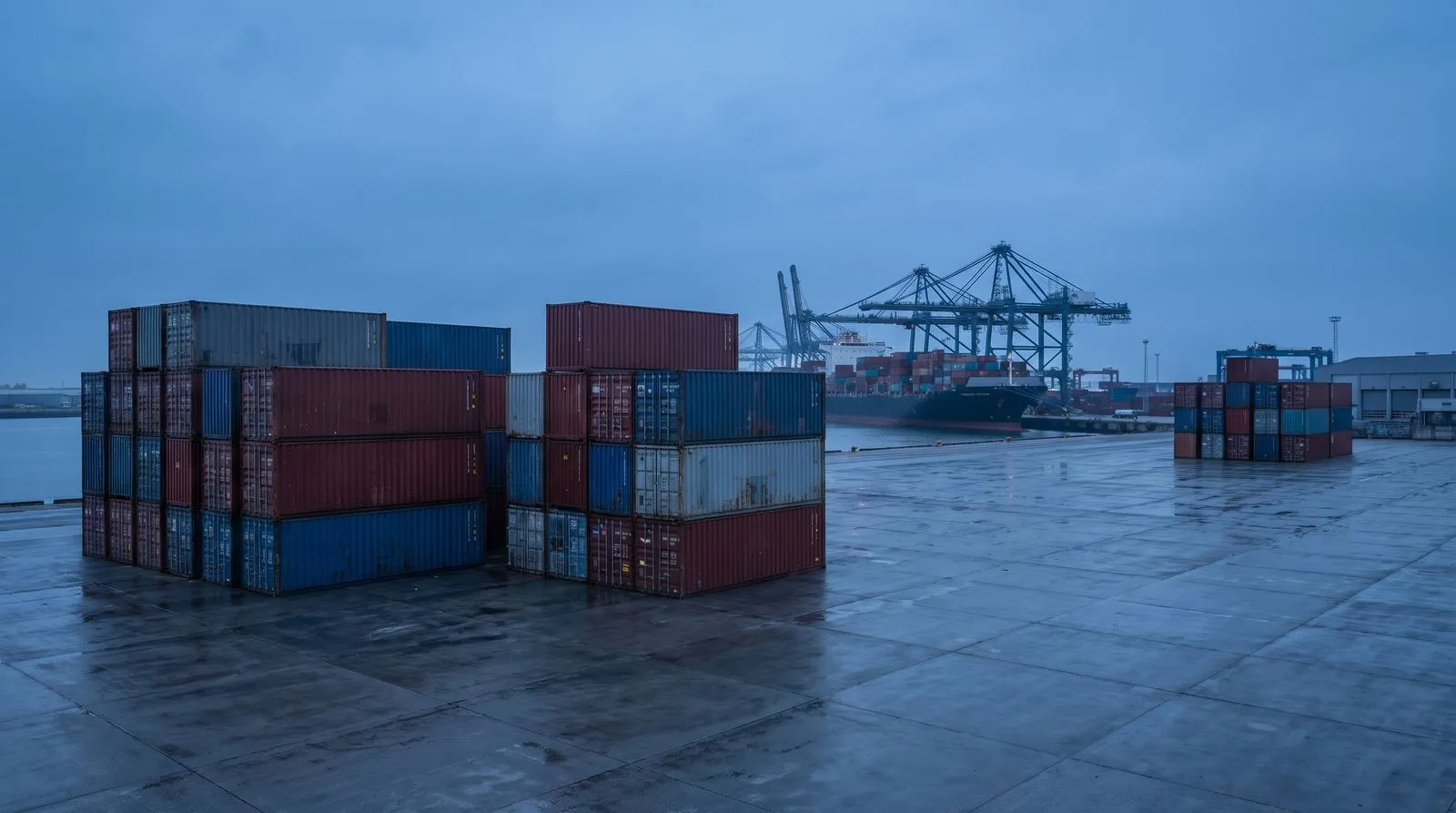
A coconut contract that says “500 tonnes, December-February” does not say how the cargo arrives. Without a written split-shipment clause, the seller may ship in one lot, three lots or six, and the buyer finds out from the booking confirmations. Every extra lot adds a bill of lading, a freight exposure and a quality sample.
This note covers split shipments and partial deliveries in coconut contracts: what the rules default to, what to write instead, and how to keep price and spec cover attached to each lot. The audience is the procurement manager who signs the contract but does not see the vessel schedule.
What is a partial shipment, and who decides?
A partial shipment is a delivery of part of the contracted quantity, with the rest following under the same contract. Under the ICC’s UCP 600, the letter-of-credit rulebook, article 31 permits partial shipments unless the credit says otherwise. Documents showing shipment on more than one vehicle within the same transport mode count as a partial shipment, even if the vehicles leave the same day for the same destination (ICC UCP 600).
The sale contract itself can say something different. Under section 31 of the English Sale of Goods Act 1979, a buyer cannot be required to take delivery in instalments unless the contract agrees it (legislation.gov.uk). Many coconut contracts are governed by English law, so check the governing-law line before assuming either default.
The gap matters. The credit may allow partial shipments while the sale contract is silent, and the two documents then disagree.
Why do sellers split coconut cargo?
Sellers split for reasons that have nothing to do with the buyer. A mill may have 18 tonnes ready against a 20-tonne container. A vessel may be full. A fumigation or phytosanitary slot may open on a different day for each lot.
Buyers split for their own reasons: warehouse space, cash flow, or a production plan that consumes 80 tonnes a month, not 240 at once. Agree the split before the booking, so it serves the buyer’s plan and not only the seller’s yard.
Schedule reliability makes a single sailing a thin plan. Sea-Intelligence put global schedule reliability at 50.6% in September 2026, down from a peak of 64.5% in May, with late vessels arriving 6.65 days behind on average (FreshPlaza reporting Sea-Intelligence). Drewry expects 42 blank sailings out of 724 planned on the major East-West trades in weeks 48 to 52 of 2026, about 6% (Drewry). Staggered lots spread that risk, though they do not remove it. See also our note on blank sailings and peak-season capacity.
What should the split clause say?
Five points belong in writing. Each closes a dispute that otherwise surfaces after the first lot.
| Clause point | What to write | Dispute it prevents |
|---|---|---|
| Permitted lots | Maximum number of lots, minimum lot size (for example, full 20 ft or 40 ft FCL only) | Seller shipping three part-loaded containers to save a booking |
| Shipment windows | One window per lot, with a long-stop date for the last lot | ”December-February” read as “all in February” |
| Tolerance | Quantity tolerance on the total, stated as a percentage, and who elects | Over- or under-shipment on the final lot |
| Lot independence | Whether each lot is a separate contract for payment and rejection | One failed lot cancelling the balance |
| Price and spec | Price basis and spec fixed for all lots, or re-opened at stated dates | Price drift between lot one and lot four |
Tolerance deserves one extra line. A 5% tolerance on 500 tonnes is 25 tonnes, roughly one extra container. State whether it applies to the total or to each lot, and which party chooses. Check any tolerance wording against the standard form your contract incorporates; the desk has not confirmed a single industry default for coconut products.
Does a late or rejected lot cancel the whole contract?
Not automatically. Section 31(2) of the Sale of Goods Act says that where instalments are paid for separately, a defective or missed instalment may or may not justify repudiating the whole contract, depending on the terms and the circumstances. Otherwise it gives only a damages claim. Nobody wants that uncertainty in a procurement file.
So write the answer in. For desiccated coconut, one useful rule is that a rejected lot is replaced within a stated number of days and the remaining lots proceed. A buyer can also keep the right to cancel the undelivered balance if two lots fail in a row, on free fatty acid, moisture or Salmonella. This follows the logic of the container rejection playbook.
The letter of credit has its own trap. Under article 32 of UCP 600, if a credit calls for drawings in instalments within set periods and one is not drawn within its period, the credit ceases to be available for that instalment and any later one (ICC UCP 600). A late first lot can therefore freeze payment on lots two to four. Our L/C discrepancies note lists the other common triggers.
How do you keep price and quality cover on every lot?
A fixed price for the whole contract is simple. A fixed price for lot one and a formula for later lots is where disputes live. Agree which applies before signing, and tie any formula to a named, public reference with a stated fixing date.
Quality needs the same discipline. One pre-shipment sample approval on lot one does not carry to lot four. Specify a COA per lot, retained samples per lot, and the right to test any lot at an independent lab. Moisture, free fatty acid and micro limits should be identical for each lot, and the same limits should appear in every shipping instruction. Our note on reading a desiccated coconut COA covers which lines to check.
Supply context also affects what a seller can promise. The Philippine Coconut Authority expects 2026 output of about 15.24 million tonnes, at least 5% above the 14.51 million tonnes reported for 2025 (FreshPlaza, citing Manila Bulletin). More raw material does not guarantee more processing slots, but it makes a multi-lot programme easier to commit to than in a short crop.
Split shipment or blanket order?
A split shipment divides one contract into lots. A blanket order sets a framework quantity and the buyer calls off lots against it. The first suits a one-off purchase with known timing. The second suits a recurring programme where volumes shift month to month. Our note on blanket orders and call-off contracts sets out the mechanics. If the split schedule keeps getting amended, the buyer probably wants a call-off structure.
What this means for buyers
- Procurement manager (persona A): insist on a written lot schedule with windows per lot. A single “shipment period” line is not a schedule.
- Importer or distributor (B): match lot size to container size. Part-loaded containers cost freight and add risk.
- Brand owner (C): fix spec and COA per lot, not once. Your co-packer’s line stops on the lot that fails.
- Trader (D): check that the L/C and the sale contract agree on partial shipments before the first booking.
- All: state who elects the tolerance, and whether a failed lot ends the balance.
FAQ
Are partial shipments allowed under a letter of credit? Yes, unless the credit prohibits them. UCP 600 article 31 permits partial shipments by default. Check the credit text, because many are issued with “partial shipments not allowed”.
Can a buyer refuse delivery in instalments? Under English sale-of-goods law, yes, unless the contract agrees instalments. Most coconut contracts agree them, so the real question is the schedule, not the right.
Does one rejected lot cancel the contract? Not by default. It depends on the contract terms and circumstances. Write a replacement and cancellation rule into the contract.
How many lots is too many? Each lot adds documents and a failure point. For most buyers, two to four full-container lots is workable. Past that, a call-off structure is cleaner.
Need a lot schedule written into a coconut contract? Send the desk an RFQ through the contact page.