
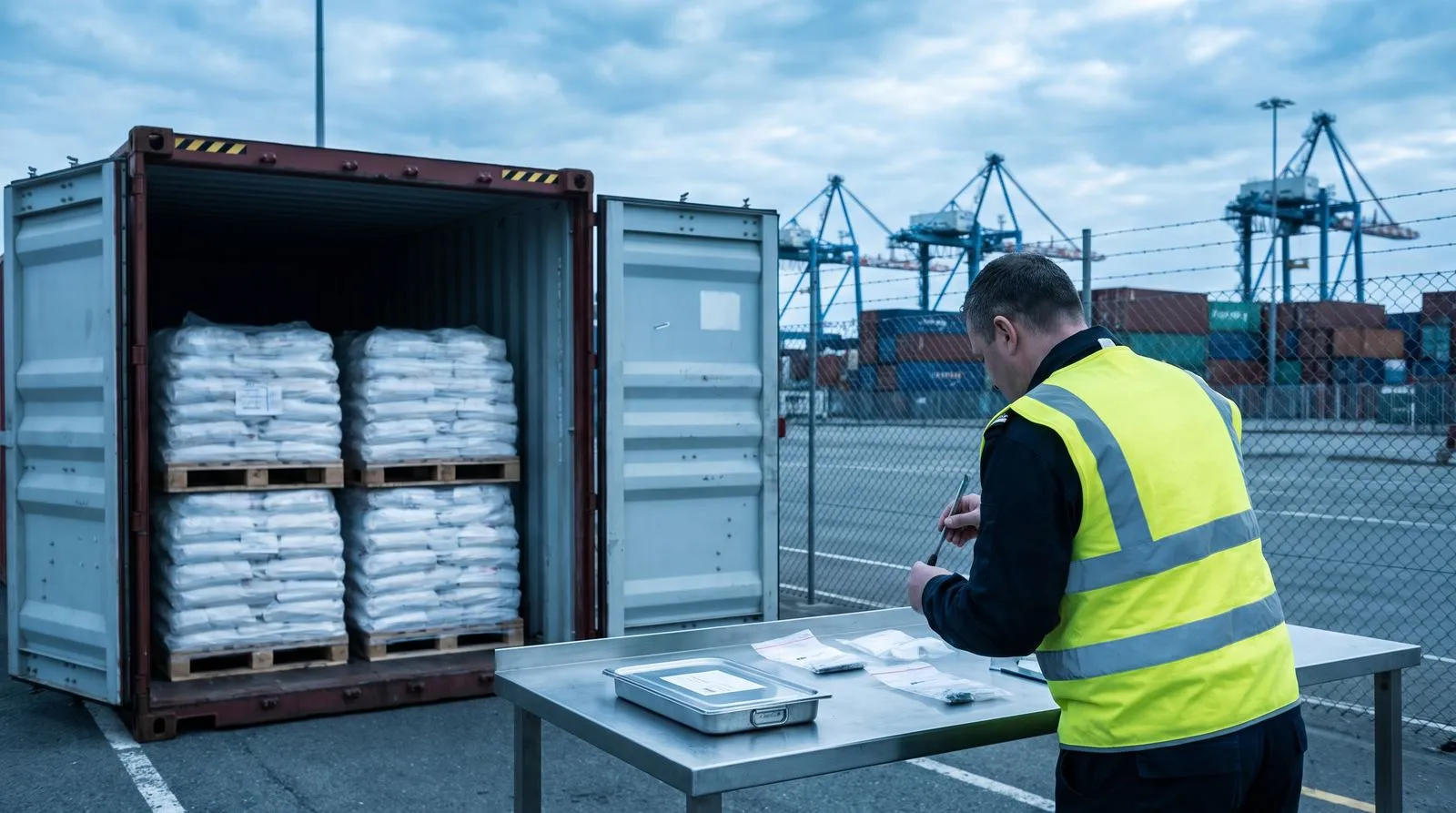
Coconut ingredients bound for Australia face two separate checks, and they run in sequence. First comes the biosecurity check, which the Department of Agriculture, Fisheries and Forestry publishes in a system called BICON. Second comes the food safety check, the Imported Food Inspection Scheme (IFIS), which can sample and test the consignment at the border. A buyer who plans for only one of them finds the other at the wharf.
The practical effect is time and cost. A lot that fails IFIS testing is held while results come back, and later consignments from the same source can face extra testing. For a procurement manager importing desiccated coconut, the way to protect landed cost is to treat both checks as contract terms, not as the importer’s problem to solve after arrival.
What is BICON and what does it decide?
BICON is the Biosecurity Import Conditions system. The department states that imported food safety requirements are now included in BICON, so one lookup covers both the biosecurity conditions and the food rules for a given product. You search by commodity and origin, and the system returns the conditions that apply.
The department’s coconut page covers shredded coconut, coconut meat (fresh, chilled, frozen or dried) and desiccated coconut. It lists New Zealand as excluded and classes the product as a surveillance food. BICON also states whether an import permit is needed. Read the live result for your product and origin on the day you place the order, because conditions are updated and origin-specific entries differ.
Biosecurity conditions are not optional extras. The department’s food legislation page sets out that all biosecurity requirements must be met before IFIS requirements apply. A consignment that fails the first gate never reaches the second.
How does the Imported Food Inspection Scheme work?
IFIS is a risk-based border program run under the Imported Food Control Act 1992. Cargo is referred for inspection through the Integrated Cargo System, and the Imported Food Control Order 2019 lists the foods treated as risk food: foods the department judges to carry a medium or high public health risk. The department’s inspection and testing page explains the categories.
Three categories matter to a buyer.
| Category | What it means | Buyer exposure |
|---|---|---|
| Risk food | Listed in the Order; referred for inspection and analysis, initially at 100% of consignments | Every early lot is tested |
| Surveillance food | Referred at a lower, sampled rate | A random lot can be pulled |
| Compliance agreement food | Not referred as risk or surveillance food | Needs a prior agreement with the department |
The legal responsibility for compliance sits with the importer. That is the point to carry into the contract: the Australian importer answers to the department, so they will want the supplier’s paperwork to answer the department’s questions.
The current sampling rates are set in the Imported Food Control Regulations 2019 and the department’s annual inspection data, and they change with compliance history. Check the regulations before quoting a percentage to a customer.
Why does Salmonella keep coming up for dried coconut?
Because it is a known failure mode. Food Standards Australia New Zealand (FSANZ) publishes risk statements for imported foods, and a dried coconut entry covers Salmonella. The department’s July 2025 failing food report lists several Indian coconut products, grated and frozen grated among them, failing for Salmonella.
Note the consequence stated in that report. Future consignments of failed risk food are referred automatically for increased testing, so a holding order is not issued each time. One failure therefore changes the testing burden on every later shipment from that source.
Dry processing does not remove the exposure. The kill step and the post-process controls decide it. The desk’s note on the Salmonella kill step in desiccated coconut covers what a supplier should be able to show, and the COA reading guide explains why a certificate alone is a weak defence.
How does the sequence run on a live shipment?
Start before booking. The supplier confirms the BICON conditions for the product and origin, and the buyer files that result. Next the cargo sails with the documents the conditions call for. On arrival, the biosecurity requirements are assessed first, and only then can the cargo be referred for food inspection.
A referral means the department takes samples and the lot waits for results. The importer carries the waiting cost: storage, demurrage and a customer line short of stock. Our note on demurrage and detention shows who normally pays when a box is held, and the answer is rarely the supplier unless the contract says so.
One short rule follows. Plan for the inspection, not for the exemption.
What should the purchase contract say?
Put the Australian requirements in the contract before the shipment, not in an email after the box is booked.
- Destination clause. State Australia as the destination and require the supplier to confirm the BICON result for the product and origin at order date.
- Pathogen testing. Require lot-level Salmonella results from an accredited laboratory, with the sampling plan stated.
- Lot coding. Every carton and bag carries a lot code that ties to the COA and the production record. See traceability and lot coding.
- Documents. Align the file to the import document pack: commercial invoice, packing list, bill of lading, phytosanitary certificate where BICON asks for one, and the COA.
- Failure allocation. Say who pays for holding, testing, re-export or destruction if a lot fails. The container rejection playbook shows the clauses that decide these disputes.
An independent pre-shipment inspection adds a check before the cargo sails. It costs less than a held container.
What this means for buyers
- Procurement managers (A): run the BICON search at order date and file the result with the PO. Ask for lot-level Salmonella data as a standing requirement.
- Importers and distributors (B): budget for a referral. Hold enough stock cover that a held lot does not stop a customer’s line.
- Brand owners (C): a failed lot can affect later shipments from the same source, so qualify a second supplier before launch volumes.
- Traders (D): price in the risk that a source with a failure on record gets increased testing, and that extra time on the wharf is a cost somebody carries.
Buyers shipping to the United Kingdom face a comparable two-stage pattern, set out in the note on UK imports and IPAFFS.
FAQ
Is desiccated coconut a risk food in Australia? The department’s coconut page classes it as a surveillance food. The Imported Food Control Order 2019 is the authority on risk food listings, so confirm the current entry before shipping.
Do I need an import permit? BICON states whether a permit is required for the product and origin. Search it on the order date, since conditions are updated.
What happens if a consignment fails testing? It is held while results are assessed. Per the department’s failing food reports, later consignments of failed risk food are referred for increased testing.
Who is legally responsible for compliance? The importer. The supplier’s documents and test results are the evidence the importer relies on.
Shipping coconut to Australia and need the spec and test plan locked before the booking? Send the desk an RFQ.